书单
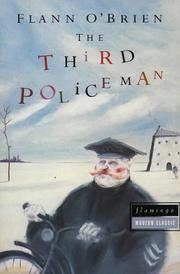
The Third Policeman (1967)
百科
这个词条暂时没有中文维基百科条目,下面是英文维基百科的内容(英文原文):
The Third Policeman is a novel by Irish writer Brian O'Nolan, writing under the pseudonym Flann O'Brien. It was written in 1939 and 1940, but after it initially failed to find a publisher, the author withdrew the manuscript from circulation and claimed he had lost it. The book remained unpublished at the time of his death in 1966. It was published by MacGibbon & Kee in 1967.
Plot summary
The Third Policeman is set in rural Ireland and is narrated by a dedicated amateur scholar who studies de Selby, a scientist and philosopher. The narrator, whose name the reader never learns, is orphaned at a young age. At boarding school, he discovers the work of de Selby and becomes a fanatically dedicated student of it. One night he breaks his leg under mysterious circumstances – "if you like, it was broken for me" – and he is ultimately fitted with a wooden leg to replace the original one. On returning to his family home, he meets and befriends John Divney who is in charge of the family farm and pub. Over the next few years, the narrator devotes himself to the study of de Selby's work and leaves Divney to run the family business.
By the time the narrator is thirty, he has written what he believes to be the definitive critical work on de Selby but does not have enough money to have it published. Divney observes that Mathers, a local man, "is worth a packet of potato-meal" and eventually it dawns on the narrator that Divney plans to rob and kill Mathers. The narrator and Divney encounter Mathers one night on the road and Divney knocks Mathers down with a bicycle pump. The narrator, prompted by Divney, finishes Mathers off with a spade and then notices that Divney has disappeared with Mathers's cash box. When Divney returns, he refuses to reveal the location of the cash box and fends off the narrator's repeated inquiries. To ensure that Divney does not retrieve the box unobserved, the narrator becomes more and more inseparable from Divney, eventually sharing a bed with him: "the situation was a queer one and neither of us liked it".
Three years pass, in which the previously amicable relationship between the narrator and Divney breaks down. Eventually, Divney reveals that the box is hidden under the floorboards in Mathers's old house, and instructs the narrator to fetch it. The narrator follows Divney's instructions but just as he reaches for the box, "something happened":
It was as if the daylight had changed with unnatural suddenness, as if the temperature of the evening had altered greatly in an instant or as if the air had become twice as rare or twice as dense as it had been in the winking of an eye; perhaps all of these and other things happened together for all my senses were bewildered all at once and could give me no explanation.
The box has disappeared, and the narrator is perplexed to notice that Mathers is in the room with him. During a surreal conversation with the apparently dead Mathers, the narrator hears another voice speaking to him which he realises is his soul: "For convenience I called him Joe." The narrator is bent on finding the cash box, and when Mathers tells him about a remarkable police barracks nearby he resolves to go to the barracks and enlist the help of the police in finding the box.
On the way, he meets a one-legged bandit named Martin Finnucane, who threatens to kill him but who becomes his friend upon finding out that his potential victim is also one-legged. The narrator approaches the police barracks and is disturbed by its appearance:
It looked as if it were painted like an advertisement on a board on the roadside and indeed very poorly painted. It looked completely false and unconvincing.
Inside the barracks he meets two of the three policemen, Sergeant Pluck and Policeman MacCruiskeen, who speak largely in non-sequitur and who are entirely obsessed with bicycles. There he is introduced to various peculiar or irrational concepts, artefacts, and locations, including a contraption that collects sound and converts it to light based on a theory regarding omnium, the fundamental energy of the universe; a vast underground chamber called 'Eternity,' where time stands still, mysterious numbers are devoutly recorded and worried about by the policemen; a box from which anything you desire can be produced; and an intricately carved chest containing a series of identical but smaller chests. The infinite nature of this last device causes the narrator great mental and spiritual discomfort.
It is later discovered that Mathers has been found dead and eviscerated in a ditch. Joe suspects Martin Finnucane, but to the narrator's dismay he himself is charged with the crime because he is the most convenient suspect. He argues with Sergeant Pluck that since he is nameless, and therefore, as Pluck observed, "invisible to the law", he cannot be charged with anything. Pluck is surprised, but after he unsuccessfully attempts to guess the narrator's name he reasons that since the narrator is nameless he is not really a person, and can therefore be hanged without fear of repercussions:
The particular death you die is not even a death (which is an inferior phenomenon at best) only an insanitary abstraction in the backyard[…].
The narrator calls on the help of Finnucane, but his rescue is thwarted by MacCruiskeen riding a bicycle painted an unknown colour which drives those who see it mad. He faces the gallows, but the two policemen are called away by dangerously high readings in the underground chamber. The following day he escapes from the barracks on a bicycle of unusual perfection.
以上文字摘自英文维基百科「The Third Policeman」(有删节,去掉了参考文献等尾部小节),按 CC BY-SA 4.0 使用,作者为维基百科的各位编者。
资料卡
- 原题
- The Third Policeman
- 原作语言
- 英语
- 首次出版
- 1967 年
- 作品形式
- 长篇小说
- 体裁
- 犯罪作品、哲学小说
- 首版出版社
- Dalkey Archive Press
- 前作
- At Swim-Two-Birds
- 续作
- An Béal Bocht
- 故事发生地
- 爱尔兰
资料卡来自 Wikidata Q2483345(CC0),众包数据,个别字段可能不全。
更多资料与书评
在哪读
Brian O'Nolan 的其他作品
作者页 ›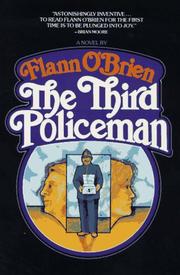
相似的书
 豆瓣 #43
 豆瓣 #186
 豆瓣 #127
 豆瓣 #193