 书单
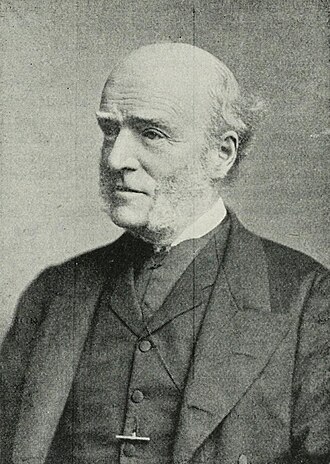
托马斯·休斯
- 生卒
- 1822 – 1896
- 国籍
- 英国
- 外文名
- Thomas Hughes
照片:Russell & Sons,公有领域,来自维基共享资源「Portrait of Thomas Hughes.jpg」(经缩小)。
生平与创作
这个词条暂时没有中文维基百科条目,下面是英文维基百科的内容(英文原文):
Thomas Hughes (20 October 1822 – 22 March 1896) was an English barrister, judge, politician and author. He is most famous for his novel Tom Brown's School Days (1857), a semi-autobiographical work set at Rugby School, which Hughes and his brother had attended. It had a lesser-known sequel, Tom Brown at Oxford (1861).
Hughes had numerous other interests, in particular as a Member of Parliament, in the British co-operative movement, and in a settlement—Rugby, Tennessee, US—reflecting his values.
Early life
Hughes was the second son of John Hughes, editor of the Boscobel Tracts (1830), and was born in Uffington, Berkshire (now in Oxfordshire). He had six brothers, and one sister, Jane Senior, who later became Britain's first female civil servant. At the age of eight he was sent to Twyford School, a prep school near Winchester, where he remained until the age of eleven. In February 1834 he went to Rugby School, which was then under the celebrated Thomas Arnold, a contemporary of his father at Oriel College, Oxford.
Hughes excelled at sports rather than in scholarship, and his school career culminated in a cricket match at Lord's Cricket Ground. In 1842 he went on to Oriel College, and graduated BA in 1845. At Oxford, he played cricket for the Oxford University Cricket Club in the annual University Match against Cambridge, also played at Lord's, a match still regarded as first-class cricket.
Legal career
Hughes was called to the bar in 1848, became a Queen's Counsel in 1869 and a bencher in 1870. He was appointed as a county court judge in the Chester district in July 1882.
Social interests
A committed social reformer, Hughes became involved in the Christian socialism movement led by Frederick Maurice, which he joined in 1848. In January 1854 he was one of the founders of the Working Men's College in Great Ormond Street, and was the college's principal from 1872 to 1883.
In 1850, Hughes gave evidence to a House of Commons committee on savings. In so doing, he participated in a Christian Socialist initiative, which led shortly to the Industrial and Provident Societies Partnership Act 1852 and the emergence of the industrial and provident society. The Act was the work of Robert Aglionby Slaney, with whom Hughes worked in alliance.
Hughes was involved also in the formation of some early trade unions, and helped finance the printing of Liberal publications; and acted as the first President of the Co-operative Congress in 1869, serving on the Co-operative Central Board. He invested with William Romaine Callender in co-operative mills, in 1866.
In politics
Hughes was elected to Parliament as a Liberal for Lambeth (1865–68), and for Frome (1868–74). He stood as candidate in 1874 for Marylebone in 1874, but dropped out just before the election, despite support from Octavia Hill. The context for the end of his political career was the unpopularity with Hughes's Frome constituents of his support for the Elementary Education Act 1870.
As an MP, Hughes worked on trade union legislation, but was not in a position to have major changes passed. He had greater success in improving the legal position of co-operatives, which in particular became able to operate as a limited company. The issue of legal obstacles to the operation of labour unions was topical, and in 1867 Hughes was made a member of a Royal Commission set up to consider the matter. Initially he was the only one on the committee sympathetic to the union point of view; after some lobbying he was joined by Frederic Harrison, and a concession was made to union representatives, allowing them observer places in the proceedings. Hughes then worked with Harrison and Robert Applegarth to diminish the effect of some of the testimony from employers.
The outcome of this commission was that Harrison, Hughes and Lord Lichfield produced a minority report (1869), recommending that all the legal restrictions should be dropped. Then the matter was raised again in a second Commission, at the end of Hughes's time in Parliament. At that point Alexander Macdonald used a minority report to refer back to Hughes's earlier view; but Hughes signed the majority report. It advocated amendment of the Master and Servant Act 1867, but little substantive change to the Criminal Law Amendment Act 1871 and the law of conspiracy.
Volunteers
During the French invasion scare of 1859, Hughes raised the 19th (Bloomsbury) Middlesex Rifle Volunteer Corps from among the students of the Working Men's College, and commanded it with the rank of Lieutenant-Colonel until 1869, when he became the unit's first Honorary Colonel. The battalion was known as 'Tom Brown's Corps'. Hughes estimated that it was the poorest in the metropolis, the Rifle Volunteer Corps at the time being predominantly middle class. He also served as deputy editor of the Volunteer Services Gazette.
Later life
In 1878–79, Hughes began writing The Manual for Co-operators (1881), with Vansittart Neale, for the Co-operative Congress. As a side-product he developed an interest in the model village. In 1880, he acquired the ownership of Franklin W. Smith's Plateau City and founded a settlement in America—Rugby, Tennessee—which was designed as an experiment in utopian living for the younger sons of the English gentry. It followed closely on the failed colony of Buckthorn (existing about 1872 to 1879), established by another Englishman, Charles Lempriere, in western Virginia; this settlement is reported to have been suggested by Hughes. Rugby was also unsuccessful on its own terms, but it still exists and is listed on the US National Register of Historic Places.
Hughes was also a prominent figure in the anti-opium movement, and a member of the Society for the Suppression of the Opium Trade.
At the end of the 1880s Hughes clashed with John Thomas Whitehead Mitchell of the Co-operative Wholesale Society, over the vertical integration Mitchell favoured for the Society. Hughes died in 1896 aged 73, at Brighton, of heart failure, and was buried there.
以上文字摘自英文维基百科「Thomas Hughes」(有删节,去掉了参考文献等尾部小节),按 CC BY-SA 4.0 使用,作者为维基百科的各位编者。
资料卡
- 母语名
- Thomas Hughes
- 笔名
- Vacuus Viator
- 出生
- 1822 年 10 月 20 日
- 出生地
- 牛津郡
- 逝世
- 1896 年 3 月 22 日
- 逝世地
- 布赖顿
- 职业
- 法官、板球运动员、作家、政治人物、儿童文学作家、小说家、律师、工会会员 等 9 项
- 使用语言
- 英语
- 写作语言
- 英语
- 就读学校
- 拉格比公学、牛津大学奥里尔学院
- 配偶
- Anne Frances Ford
- 代表作
- 汤姆求学记
资料卡来自 Wikidata Q332580(CC0),众包数据,个别字段可能不全。
本站收录的作品(1)
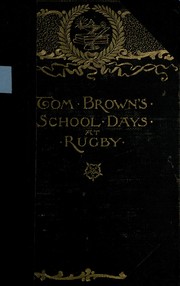
作品年表(1 本)
本站书库里署名托马斯·休斯的书(Open Library 上至少 10 人加过书架的才收),按首版年份排(有本站书页的用 Wikidata 记的首版年,其余用 Open Library 的);年份偶尔记成后来的版本或译本,以原书为准。全部作品见 Open Library。
- 1857汤姆求学记Tom Brown's School Days书架 34