 书单
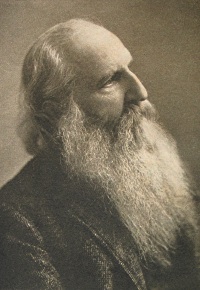
里查·布克
- 生卒
- 1837 – 1902
- 国籍
- 英国
- 外文名
- Richard Maurice Bucke
照片:作者不详,公有领域,来自维基共享资源「Richard Maurice Bucke.jpg」(经缩小)。
生平与创作
这个词条暂时没有中文维基百科条目,下面是英文维基百科的内容(英文原文):
Richard Maurice Bucke (18 March 1837 – 19 February 1902) was a Canadian psychiatrist in the late 19th century. An adventurer during his youth, Bucke later studied medicine. Eventually, as a psychiatrist, he headed the provincial Asylum for the Insane in London, Ontario. Bucke was a friend of several noted men of letters in Canada, the United States, and England. Besides publishing professional articles, Bucke wrote three non-fiction books: Man's Moral Nature, Walt Whitman, and Cosmic Consciousness: A Study in the Evolution of the Human Mind, which is his best-known work.
Early life
Richard Maurice Bucke was born in 1837 in Methwold, England, the son of Rev. Horatio Walpole Bucke (a parish curate) and his wife Clarissa Andrews. The parents and their children emigrated to Canada when he was a year old, settling near London, Upper Canada.
Horatio W. Bucke had given up the profession of religious minister, and trusted his family's income to their Ontario farm. A sibling in a large family, Richard Maurice Bucke was a typical farm boy of that era. He was an athletic boy who enjoyed a good ball game. When he left home at the age of 16, he traveled to Columbus, Ohio and then to California. Along the way, Bucke worked at various odd jobs. He was part of a travelling party who had to fight for their lives when they were attacked by a group of Shoshone people, on whose territory they were trespassing.
In the winter of 1857–58, he was nearly frozen to death in the mountains of California, where he was the sole survivor of a silver-mining party. He had to walk out over the mountains and suffered extreme frostbite. As a result, a foot and several of his toes were amputated. He then returned to Canada via the Isthmus of Panama, probably in 1858. Henry Mills Hurd says he returned to Canada in 1860.
Medicine and psychiatry
Bucke enrolled in McGill University's medical school in Montreal, where he delivered a distinguished thesis in 1862. Although he practiced general medicine briefly as a ship's surgeon (in order to pay for his sea travel), he later specialized in psychiatry. He did his internship in London (1862–63) at University College Hospital. During that time he visited France.
He was for several years an enthusiast of Auguste Comte's positivist philosophy. Comte's belief that religion, if by that is meant spirituality, had been outmoded by science contrasts with Bucke's later belief concerning the nature of reality.
Bucke returned to Canada in 1864 and married Jessie Gurd in 1865; they had eight children.
In January 1876, Bucke became the superintendent of the Asylum for the Insane in Hamilton, Ontario. In 1877, he was appointed head of the provincial Asylum for the Insane in London, Ontario, a post he held for nearly the remainder of his life. In his work with asylum inmates, he was a reformer who encouraged organized sports and what is now called occupational therapy. Some of his surgical treatments proved deeply controversial. After adopting the Victorian-era theory that mental illness in women was often due to defective reproductive organs, Bucke began performing surgical removals of these organs from female patients. He continued this practice until his death, despite receiving increasing amounts of criticism from the medical health care community.
Experience of "cosmic consciousness"
In 1872, after an evening of stimulating conversation with his friend Walt Whitman in the countryside, Richard M Bucke was traveling back to London in a buggy when he had a religious experience. He later described the characteristics and effects of the faculty of experiencing this type of consciousness as:
its sudden appearance a subjective experience of light ("inner light")
moral elevation intellectual illumination a sense of immortality loss of a fear of death loss of a sense of sin
Bucke's personal experience of the inner state had yet another attribute, mentioned separately by the author: the vivid sense of the universe as a living presence, rather than as basically lifeless, inert matter.
The supreme occurrence of that night was his real and sole initiation to the new and higher order of ideas. But it was only an initiation. He saw the light but had no more idea whence it came and what it meant than had the first creature that saw the light of the sun.
Bucke did not immediately record the details and interpretation of his experience. This was not done until years later, and only after he had researched much of the world's literature on mysticism and enlightenment and had corresponded with many others about this subject.
Cosmic Consciousness
Bucke's magnum opus was his book Cosmic Consciousness: A Study in the Evolution of the Human Mind. The book is a compilation of various theories rather than strictly a simple record of his original mystical experience.
Bucke borrowed the term "cosmic consciousness" from Edward Carpenter, who had traveled and studied religion in the East. Bucke's friend, Carpenter, had derived the term "cosmic consciousness" from the Eastern term "universal consciousness." In his description of his personal experience, Bucke combined his recollection with thoughts of another of his friends, Caleb Pink ("C.P.")—and others—and recorded his experience in a poetic style.
Cosmic Consciousness was a book which he researched and wrote over a period of many years. It was published in 1901 and has been reprinted several times since then. In it, Bucke describes his own experience, the experiences of contemporaries (most notably Walt Whitman), and the experiences of historical figures, including Jesus, Saint Paul, Muhammad, Plotinus, Dante, Francis Bacon, William Blake, Buddha, and Ramakrishna.
Bucke developed a theory that posited three stages in the development of consciousness:
the simple consciousness of animals the self-consciousness of the mass of humanity (encompassing reason, imagination, and foresight)
cosmic consciousness — an emerging faculty which is the next stage of human development
以上文字摘自英文维基百科「Richard Maurice Bucke」(有删节,去掉了参考文献等尾部小节),按 CC BY-SA 4.0 使用,作者为维基百科的各位编者。
资料卡
- 出生
- 1837 年 3 月 18 日
- 出生地
- 梅斯沃尔德
- 逝世
- 1902 年 2 月 19 日
- 逝世地
- 伦敦
- 职业
- 精神科医师、作家
- 使用语言
- 英语
- 写作语言
- 英语
- 就读学校
- 麦吉尔大学
资料卡来自 Wikidata Q2150189(CC0),众包数据,个别字段可能不全。
本站收录的作品(1)
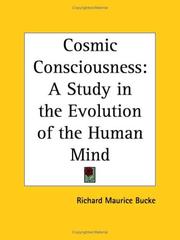
作品年表(1 本)
本站书库里署名里查·布克的书(Open Library 上至少 10 人加过书架的才收),按首版年份排(有本站书页的用 Wikidata 记的首版年,其余用 Open Library 的);年份偶尔记成后来的版本或译本,以原书为准。全部作品见 Open Library。
- 1894宇宙意识Cosmic Consciousness书架 27