 书单
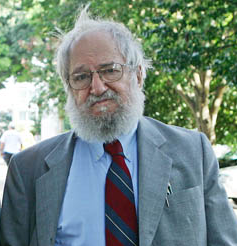
西摩尔·派普特
- 生卒
- 1928 – 2016
- 国籍
- 南非、美国
- 外文名
- Seymour Papert
照片:Rodrigo Mesquita,CC BY-SA 2.0,来自维基共享资源「Seymour Papert.png」(经缩小)。
生平与创作
西摩·佩珀特(英语:Seymour Aubrey Papert,1928年2月29日—2016年7月31日),南非比勒陀利亚人,是美国麻省理工学院的数学家。他是人工智能发展的其中一位先驱。他对智力的观点主要来自让·皮亚杰的影响。他在1968年从LISP语言的基础里创立Logo编程语言。
以上文字摘自维基百科「西摩爾·派普特」(去掉了参考文献等尾部小节),按 CC BY-SA 4.0 使用,作者为维基百科的各位编者。
中文维基百科的条目比较短,下面附上英文维基百科的内容(英文原文):
Seymour Aubrey Papert (29 February 1928 – 31 July 2016) was a South African-born American mathematician, computer scientist, and educator, who spent most of his career teaching and researching at the Massachusetts Institute of Technology. He was one of the pioneers of artificial intelligence, and of the constructionist movement in education. He was co-inventor, with Wally Feurzeig and Cynthia Solomon, of the Logo programming language.
Early years and education
Born to a Jewish family, Papert attended the University of the Witwatersrand, receiving a Bachelor of Arts degree in philosophy in 1949 followed by a PhD in mathematics in 1952. He then went on to receive a second doctorate, also in mathematics, at the University of Cambridge (1959), supervised by Frank Smithies.
Career
Papert worked as a researcher in a variety of places, including St. John's College, Cambridge, the Henri Poincaré Institute at the University of Paris, the University of Geneva, and the National Physical Laboratory in London before becoming a research associate at MIT in 1963. He held this position until 1967, when he became professor of applied math and was made co-director of the MIT Artificial Intelligence Laboratory by its founding director Professor Marvin Minsky, until 1981; he also served as Cecil and Ida Green professor of education at MIT from 1974 to 1981.
Research
Papert worked on learning theories, and was known for focusing on the impact of new technologies on learning in general, and in schools as learning organizations in particular.
Constructionism
At MIT, Papert went on to create the Epistemology and Learning Research Group at the MIT Architecture Machine Group which later became the MIT Media Lab. Here, he was the developer of a theory on learning called constructionism, built upon the work of Jean Piaget in constructivist learning theories. Papert had worked with Piaget at the University of Geneva from 1958 to 1963 and was one of Piaget's protégés; Piaget himself once said that "no one understands my ideas as well as Papert". Papert has rethought how schools should work, based on these theories of learning.
Logo
Papert used Piaget's work in his development of the Logo programming language while at MIT. He created Logo as a tool to improve the way children think and solve problems. A small mobile robot called the "Logo Turtle" was developed, and children were shown how to use it to solve simple problems in an environment of play. A main purpose of the Logo Foundation research group is to strengthen the ability to learn knowledge. Papert insisted a simple language or program that children can learn—like Logo—can also have advanced functionality for expert users.
Other work
As part of his work with technology, Papert has been a proponent of the Knowledge Machine. He was one of the principals for the One Laptop Per Child initiative to manufacture and distribute The Children's Machine in developing nations.
Papert also collaborated with the construction toy manufacturer Lego on their Logo-programmable Lego Mindstorms robotics kits, which were named after his groundbreaking 1980 book.
A curated archive of Papert's articles, speeches, and interviews may be found on a website dedicated to Papert at: The Daily Papert.
Personal life
Papert was a political and anti-apartheid activist during his student years in South Africa. He subsequently chose self exile. He was a leading figure in the revolutionary socialist circle around Socialist Review while living in London in the 1950s.
Papert was married four times; first to Dona Strauss, and later to Androula Henriques. Papert's third wife was MIT professor Sherry Turkle, together they wrote the influential paper "Epistemological Pluralism and the Revaluation of the Concrete".
In his final 24 years, Papert was married to Suzanne Massie, who was a Russian scholar and author of Pavlovsk: The Life of a Russian Palace and Land of the Firebird.
以上文字摘自英文维基百科「Seymour Papert」(有删节,去掉了参考文献等尾部小节),按 CC BY-SA 4.0 使用,作者为维基百科的各位编者。
资料卡
- 母语名
- Seymour Papert
- 出生
- 1928 年 2 月 29 日
- 出生地
- 比勒陀利亚
- 逝世
- 2016 年 7 月 31 日
- 逝世地
- 布卢希尔
- 职业
- 数学家、计算机科学家、教育家、大学教师、心理学家、人工智能研究者
- 使用语言
- 英语
- 写作语言
- 英语
- 就读学校
- 金山大学、剑桥大学圣约翰学院(1954)、日内瓦大学、剑桥大学
- 领域
- 认知科学
- 配偶
- 苏珊·马西、雪利·特克尔
- 代表作
- Mindstorms、Logo语言、每个孩子一台笔记型电脑、感知器、乐高Mindstorms
- 获奖
- 古根海姆学者奖、马可尼奖(1981)
资料卡来自 Wikidata Q335027(CC0),众包数据,个别字段可能不全。
本站收录的作品(2)
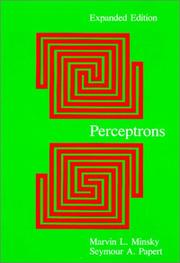
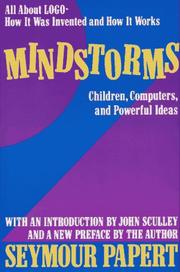
作品年表(3 本)
本站书库里署名西摩尔·派普特的书(Open Library 上至少 10 人加过书架的才收),按首版年份排(有本站书页的用 Wikidata 记的首版年,其余用 Open Library 的);年份偶尔记成后来的版本或译本,以原书为准。全部作品见 Open Library。
- 1969感知器Perceptrons书架 23
- 1980Mindstorms书架 42
- 1985The Children's Machine书架 14