 书单
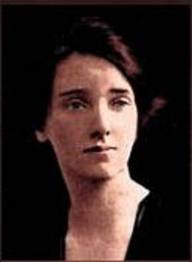
Dorothy Macardle
- 生卒
- 1889 – 1958
- 国籍
- 爱尔兰
照片:Midsomer95,CC BY-SA 3.0,来自维基共享资源「DorothyMacardle.jpg」(经缩小)。
生平与创作
这个词条暂时没有中文维基百科条目,下面是英文维基百科的内容(英文原文):
Dorothy Macardle (7 March 1889 – 23 December 1958) was an Irish writer, novelist, playwright, journalist and non-academic historian. Associated throughout her life with Irish republicanism, she was a founding member of Fianna Fáil in 1926 and was considered to be closely aligned with Éamon de Valera until her death, although she was vocal critic of how women were represented in the 1937 constitution created by Fianna Fáil. She was also unable to respect de Valera's attitudes adopted during World War II. Her book, The Irish Republic, is one of the more frequently cited narrative accounts of the Irish War of Independence and its aftermath, particularly for its exposition of the anti-treaty viewpoint.
Early life
Dorothea Margaret Callan Macardle was born in Dundalk, County Louth on 7 March 1889 into a wealthy brewing family famous for producing Macardle's Ale. Macardle's father, Sir Thomas Callan Macardle, was a Catholic who supported John Redmond and the Irish Home Rule movement, while her mother, Lucy "Minnie" Macardle, came from an English Anglican background and was politically a unionist; Lucy had converted to Catholicism upon her marriage to Thomas. Macardle and her siblings were raised as Catholics, but Lucy, who was politically isolated in Ireland, "inculcated in her children an idealised view of England and an enthusiasm for the British empire". Macardle received her secondary education in Alexandra College, Dublin—a school under the management of the Church of Ireland—and later attended University College Dublin. Upon graduating, she returned to teach English at Alexandra where she had first encountered Irish nationalism as a student. This was further developed by Macardle's first experiences of Dublin's slums, which "convinced her that an autonomous Ireland might be better able to look after its own affairs" than the Dublin Castle administration could.
Between 1914 and 1916, Macardle lived and worked in Stratford-upon-Avon in Warwickshire, England. There, her encounters with upper-class English people who expressed anti-Irish sentiment and supported keeping Ireland in the British Empire by force further weakened her Anglophilia. Upon the outbreak of World War I, Macardle supported the Allies, as did the rest of her family. Her father led the County Louth recruiting committee while two of her brothers volunteered for the British Army. Her brother, Lieutenant Kenneth Callan Macardle, was killed at the Battle of the Somme, while another brother, Major John Ross Macardle, survived the war and earned the Military Cross. While Macardle was a student, the Easter Rising occurred, an experience credited for a further divergence of her views regarding republicanism and her family.
Irish revolutionary period
Irish War of Independence
Macardle was a member of the Gaelic League and later joined both Sinn Féin and Cumann na mBan in 1917. In 1918 Macardle was arrested by the RIC while teaching at Alexandra.
On 19 January 1919, Macardle was in the public gallery for the inaugural meeting of the First Dáil and witnessed it declare unilateral independence from the United Kingdom, which would ultimately be the catalyst for the Irish War of Independence.
By 1919 Macardle had befriended Maud Gonne MacBride, the widow of the 1916 Easter Rising participant John MacBride, and together the two worked at the Irish White Cross, attending to those injured in the war. It was during this period Macardle also became a propagandist for the nationalist side.
In December 1920, Macardle travelled to London to meet with Margot Asquith, the wife of the former British prime minister HH Asquith, hoping to establish a line of communication between the Irish and British governments. It was during this trip that Macardle came into contact with Charlotte Despard, sister of the Viceroy of Ireland Lord French. Despard had taken the pro-Irish side in the war and returned with Macardle to Dublin.
Irish Civil War
Following the signing of the Anglo-Irish treaty in December 1921, Macardle took the anti-treaty side in the ensuing Irish Civil War. Alongside Gonne MacBride and Despard, she helped found the Women Prisoners' Defence League, which campaigned and advocated for republicans imprisoned by the newly established Irish Free State government. It was also during this same time that she began working alongside Erskine Childers in writing for anti-treaty publications An Phoblacht and Irish Freedom.
In October 1922 Despard, Gonne MacBride and Macardle were speaking at a protest on O'Connell Street, Dublin against the arrest of Mary MacSwiney (a sitting Teachta Dála) by the Free State when Free State authorities moved to break it up. Rioting followed and Free State forces opened fire, resulting in 14 people being seriously wounded while hundreds of others were harmed in the subsequent stampede to flee. Following the event, Macardle announced she was going to pursue support of the Anti-treaty side full-time in a letter to Alexandra College, which ultimately lead to her dismissal on 15 November 1922. In the following days Macardle was captured and imprisoned by the Free State government and subsequently served time in both Mountjoy and Kilmainham Gaols, with Rosamund Jacob as her cellmate. During one point at her time in Kilmainham, Macardle was beaten unconscious by male wardens. She became close friends with Jacob and shared a flat with her at Herbert Place, Ballsbridge later in the 1920s.
The Irish Civil War concluded in the spring of 1923, and Macardle was released from prison on 9 May.
以上文字摘自英文维基百科「Dorothy Macardle」(有删节,去掉了参考文献等尾部小节),按 CC BY-SA 4.0 使用,作者为维基百科的各位编者。
资料卡
- 出生
- 1889 年 3 月 7 日
- 出生地
- 邓多克
- 逝世
- 1958 年 12 月 23 日
- 逝世地
- 德罗赫达
- 职业
- 历史学家、剧作家、新闻工作者、作家
- 就读学校
- Alexandra College
资料卡来自 Wikidata Q5298526(CC0),众包数据,个别字段可能不全。
本站收录的作品(1)
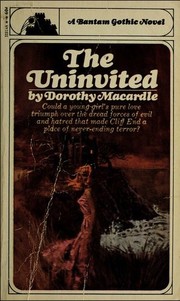
作品年表(1 本)
本站书库里署名Dorothy Macardle的书(Open Library 上至少 10 人加过书架的才收),按首版年份排(有本站书页的用 Wikidata 记的首版年,其余用 Open Library 的);年份偶尔记成后来的版本或译本,以原书为准。全部作品见 Open Library。
- 1942The Uninvited书架 62