 书单
生平与创作
耶里希·凯斯特纳(德语:Erich Kästner,1899年2月23日—1974年7月29日)是德国作家,诗人,编剧和讽刺作家,他的作品包含幽默,诗歌,儿童读物。他在1960年获得国际安徒生作家奖,被誉为西德战后儿童文学之父。
创作主题
凯斯特纳善于把成长教育主题进行蒙太奇式组合,分散在其不同的作品中。
作品
明天出版社当代外国儿童文学名家凯斯特纳作品丛书
其他译本
埃·凯斯特纳. 《两个小路特》. 国际安徒生奖作家作品选. 由黄传杰翻译. 中国少年儿童出版社. 1981年. CSBN 10056·486.
耶里希‧凯斯特纳. 《小侦探爱弥儿》. 由齐霞飞翻译. 志文. 1999年4月. ISBN 9575455835.
埃·凯斯特纳. 《雪地三游客》. 世界儿童文学丛书. 由韩瑞祥翻译. 人民文学出版社. 2000年5月. ISBN 9787020031610.
耶里希‧凯斯特纳. 《捣蛋鬼提尔》. 由萧芳如翻译. 大田. 2005年3月. ISBN 9574558029.
耶里希‧凯斯特纳. 《天生一对》. 由赖雅静翻译. 联经出版公司. 2015年6月. ISBN 9789570845747.
耶里希‧凯斯特纳. 《我和我的好朋友》. 由赖雅静翻译. 联经出版公司. 2015年6月. ISBN 9789570845754.
以上文字摘自维基百科「埃里希·凯斯特纳」(去掉了参考文献等尾部小节),按 CC BY-SA 4.0 使用,作者为维基百科的各位编者。
中文维基百科的条目比较短,下面附上英文维基百科的内容(英文原文):
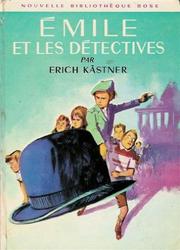
Emil Erich Kästner (German: [ˈeːʁɪç ˈkɛstnɐ] ; 23 February 1899 – 29 July 1974) was a German writer, poet, screenwriter and satirist, known primarily for his humorous, socially astute poems and for children's books including Emil and the Detectives and Lisa and Lottie. He received the international Hans Christian Andersen Award in 1960 for his autobiography When I Was a Little Boy. He was nominated for the Nobel Prize in Literature in eight separate years.
Biography
Dresden (1899–1919)
Kästner was born in Dresden, Saxony, and grew up on Königsbrücker Straße in Dresden's Äußere Neustadt. Close by, the Erich Kästner Museum was subsequently opened in the Villa Augustin that had belonged to Kästner's uncle Franz Augustin.
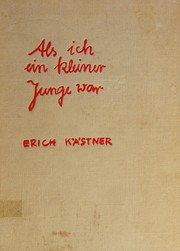
Kästner's father, Emil Richard Kästner, was a master saddlemaker. His mother, Ida Amalia (née Augustin), had been a maidservant, but in her thirties she trained as a hairstylist in order to supplement her husband's income. Kästner had a particularly close relationship with his mother. When he was living in Leipzig and Berlin, he wrote her fairly intimate letters and postcards almost every day, and overbearing mothers made regular appearances in his writings. It has been rumored that Erich Kästner's natural father was the family's Jewish doctor, Emil Zimmermann (1864–1953), but these rumors have never been substantiated. Kästner wrote about his childhood in his autobiography Als ich ein kleiner Junge war (1957, translated as When I Was a Little Boy). According to Kästner, he did not suffer from being an only child, had many friends, and was not lonely or overindulged.
In 1913, Kästner entered a teacher training school in Dresden. However, he dropped out in 1916 shortly before completing the exams that would have qualified him to teach in state schools. He was drafted into the Royal Saxon Army in 1917 and was trained at a heavy artillery unit in Dresden. Kästner was not sent to the front, but the brutality of the military training he underwent and the death of contemporaries he experienced strongly influenced his later antimilitarism. The merciless drilling he was subjected to by his drill sergeant also caused a lifelong heart condition. Kästner portrays this in his poem Sergeant Waurich.
After the end of the war, Kästner went back to school and passed the Abitur exam with distinction, earning a scholarship from the city of Dresden.
Leipzig (1919–1927)
In the autumn of 1919, Kästner enrolled at the University of Leipzig to study history, philosophy, German studies, and theater. His studies took him to Rostock and Berlin, and in 1925 he received a doctorate for a thesis on Frederick the Great and German literature. He paid for his studies by working as a journalist and critic for a newspaper, the Neue Leipziger Zeitung. However, his increasingly critical reviews, and the "frivolous" publication of his erotic poem "Abendlied des Kammervirtuosen" (Evening Song of the Chamber Virtuoso) with illustrations by Erich Ohser, led to his dismissal in 1927. That same year, he moved to Berlin, although he continued to write for the Neue Leipziger Zeitung under the pseudonym "Berthold Bürger" ("Bert Citizen") as a freelance correspondent. Kästner later used several other pseudonyms, including "Melchior Kurtz", "Peter Flint", and "Robert Neuner".
Berlin (1927–1933)
Kästner's years in Berlin, from 1927 until the end of the Weimar Republic in 1933, were his most productive. He published poems, newspaper columns, articles, and reviews in many of Berlin's important periodicals. He was a regular contributor to dailies such as the Berliner Tageblatt and the Vossische Zeitung, as well as to Die Weltbühne. Hans Sarkowicz and Franz Josef Görtz, the editors of his complete works (1998), list over 350 articles written between 1923 and 1933, but he must have written even more, since many texts are known to have been lost when Kästner's flat burned down during a bombing raid in February 1944.
以上文字摘自英文维基百科「Erich Kästner」(有删节,去掉了参考文献等尾部小节),按 CC BY-SA 4.0 使用,作者为维基百科的各位编者。
资料卡
- 母语名
- Erich Kästner
- 本名
- Emil Erich Kästner
- 笔名
- Robert Neuner、Berthold Bürger、Peter Flint
- 出生
- 1899 年 2 月 23 日
- 出生地
- 德累斯顿
- 逝世
- 1974 年 7 月 29 日
- 逝世地
- 慕尼黑
- 职业
- 作家、诗人、小说家、儿童文学作家、编剧、新闻工作者、剧作家、歌舞表演者 等 10 项
- 使用语言
- 德语
- 就读学校
- 莱比锡大学
- 创作体裁
- 儿童文学
- 所属团体
- 德国语言文学科学院、巴伐利亚造型艺术学院
- 代表作
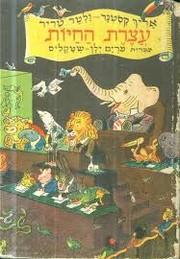
- Emil and the Detectives、The animals' conference、5月35日、When I Was a Little Boy、Dot and Anton、Emil and the three twins、会飞的教室#舞台、Three men in the snow、Lottie and Lisa、The Little Man
- 获奖
- 毕希纳奖(1957)、Commander's Cross of the Order of Merit of the Federal Republic of Germany、国际安徒生奖(1960)、Literary Prize of the State Capital of Munich(1955)、Kulturpreis der deutschen Freimaurer(1968)、Lessing Ring(1968)、honorary golden medal of the state capital Munich
资料卡来自 Wikidata Q76546(CC0),众包数据,个别字段可能不全。
本站收录的作品(4)
同时代的德意志帝国作家
前后几届的毕希纳奖得主
全部得主 ›前后几届的国际安徒生奖得主
全部得主 ›Open Library 上的全部作品
正在读取…