 书单
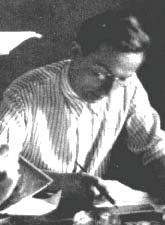
鲁道夫·阿恩海姆
- 生卒
- 1904 – 2007
- 国籍
- 德国
- 外文名
- Rudolf Arnheim
照片:作者不详,公有领域,来自维基共享资源「Rudolf Arnheim.jpg」(经缩小)。
生平与创作
鲁道夫·阿恩海姆(德语:Rudolf Arnheim,1904年7月15日—2007年6月9日),德裔美籍心理学家及美学家,是格式塔心理学美学的代表人物,曾任美国美学协会主席。
生平
1904年出生于柏林,1923年入读柏林大学,1928年获哲学博士学位。希特勒上台后他移居意大利,任职于教育电影国际学会。1939年前往英国,次年起又赴美国定居。1941年与1942年先后获洛克菲勒基金会与古根海姆基金会资助。1943年至1968年间任教于莎拉·劳伦斯学院,教授艺术心理学。期间曾于1959年获福布莱特计划的支持前往日本御茶水女子大学进行交流。1968年后,任哈佛大学视觉与环境研究系艺术心理学教授。1974年退休,并获名誉教授头衔。此后他在密歇根大学任艺术史学访问教授。
2007年6月9日在密歇根州安娜堡逝世。
评论
阿恩海姆的格式塔心理学美学建立在现代心理学的实验基础之上。他认为知觉是艺术思维的基础。并由此提出了“张力”说,认为力的结构是艺术表现的基础,而“同形”是艺术的本质。
著作
包括《艺术与视知觉》、《视觉思维》、《走向艺术心理学》、《作为艺术的电影》等。
以上文字摘自维基百科「鲁道夫·阿恩海姆」(去掉了参考文献等尾部小节),按 CC BY-SA 4.0 使用,作者为维基百科的各位编者。
中文维基百科的条目比较短,下面附上英文维基百科的内容(英文原文):
Rudolf Arnheim (German: [ˈaʁnhaɪ̯m]; July 15, 1904 – June 9, 2007) was a German-born writer, art and film theorist, and perceptual psychologist. He learned Gestalt psychology from studying under Max Wertheimer and Wolfgang Köhler at the University of Berlin and applied it to art.
His magnum opus was his book Art and Visual Perception: A Psychology of the Creative Eye (1954). Other major books by Arnheim have included Visual Thinking (1969), and The Power of the Center: A Study of Composition in the Visual Arts (1982). Art and Visual Perception was revised, enlarged and published as a new version in 1974, and it has been translated into fourteen languages. He lived in Germany, Italy, England, and the U.S., where he taught at Sarah Lawrence College, Harvard University, and the University of Michigan.
In Art and Visual Perception, he tried to use science to better understand art. In his later book Visual Thinking (1969), Arnheim critiqued the assumption that language goes before perception. For Arnheim, the only access to reality we have is through our senses. Arnheim argued that perception is strongly identified with thinking, and that artistic expression is another way of reasoning. In The Power of the Center, Arnheim addressed the interaction of art and architecture on concentric and grid spatial patterns. He argued that form and content are indivisible, and that the patterns created by artists reveal the nature of human experience.
Early years
Rudolf Arnheim was born into a Jewish family in 1904 on Alexanderplatz, in Berlin. Not long after he was born, his family moved to Kaiserdamm in Charlottenburg, where they stayed until the early 1930s. He was interested in art from a young age, as he began drawing as a child. His father, Georg Arnheim, owned a small piano factory, and Georg Arnheim's plan for his son was for him to take over the factory. However, Rudolf wanted to continue his education, so his father agreed that he could spend half his week at the university and the other half at the factory. Rudolf ended up spending more time at the university, and when he was at the factory he was distracting the employees with his inquisitions about the mechanics of the piano, so his father agreed to let him focus entirely on his education. Rudolf was interested in psychology as long as he could remember, with his specific memory of buying some of the first editions of Sigmund Freud's books when he was fifteen or sixteen. These fueled his interest in psychoanalysis.
Career
Arnheim attended the University of Berlin, where he wished to focus his studies on psychology. At that time, psychology was a branch of philosophy, so Arnheim ended up majoring in experimental psychology and philosophy, and minoring in art history and music. There were many prominent faculty members at the university at this time, among them were Albert Einstein, Max Planck, Max Wertheimer, and Wolfgang Köhler. Because Wertheimer and Köhler were in the psychology department, most of the psychology concerned Gestalt psychology. The Psychological Institute of Berlin University was located on two floors of the Imperial Palace, so Arnheim worked in makeshift laboratories decorated with paintings of angels and other artwork. This institute was more of a workshop because everyone was doing experiments and using each other rather than sitting in lectures. For Arnheim's dissertation, Max Wertheimer asked him to study human facial expressions and handwriting and how they corresponded. He looked at the extent to which people perceive an expression when they look at a face and what they perceive from a person's handwriting, as well as how the two corresponded. This was the beginning of Arnheim's study of expression, which he moved to looking at with visual arts. In 1928, he received his doctorate.
以上文字摘自英文维基百科「Rudolf Arnheim」(有删节,去掉了参考文献等尾部小节),按 CC BY-SA 4.0 使用,作者为维基百科的各位编者。
资料卡
- 母语名
- Rudolf Arnheim
- 出生
- 1904 年 7 月 15 日
- 出生地
- 柏林
- 逝世
- 2007 年 6 月 9 日
- 逝世地
- 安阿伯
- 职业
- 作家、美术史学家、心理学家、大学教师、影评人、电影学者、教育学家、新闻工作者
- 使用语言
- 德语、英语
- 就读学校
- 柏林洪堡大学
- 领域
- 电影理论、美术史、艺术心理学、电影研究、电影评论 等 6 项
- 所属团体
- 美国文理科学院
- 获奖
- 古根海姆学者奖(1941)、罗马奖(1978)、美国文理科学院院士;另有 2 项只有外文名
资料卡来自 Wikidata Q213642(CC0),众包数据,个别字段可能不全。
作品年表(4 本)
本站书库里署名鲁道夫·阿恩海姆的书(Open Library 上至少 10 人加过书架的才收),按首版年份排(有本站书页的用 Wikidata 记的首版年,其余用 Open Library 的);年份偶尔记成后来的版本或译本,以原书为准。全部作品见 Open Library。
- 1954艺术与视知觉Art and visual perception书架 60
- 1957Film as art书架 12
- 1969Visual thinking书架 56
- 1977The dynamics of architectural form书架 28