书单
百科
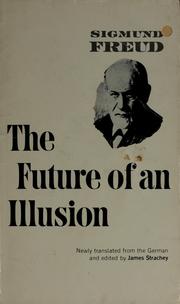
《一个幻觉的未来》(德语:Die Zukunft einer Illusion,英语:The Future of an Illusion,又译幻象之未来)是奥地利精神分析学家西格蒙德·弗洛伊德的一本著作,在1927年首次出版。弗洛伊德在书中探讨了宗教的起源、发展及未来,并从精神分析学的角度分析宗教,把它视为一种错误的信念体系。
弗洛伊德说,宗教建基于人类的无助。无助使人如婴儿般渴望父亲的保护,而这个愿望就透过宗教来实现。从这个意义上说,宗教是一种幻想:实现愿望的幻想。现代以来,科学的进步使人们意识到人类自身的重要性,从而导致宗教的衰落,对此弗洛伊德欢迎这种发展。
概要
弗洛伊德将宗教视为一种幻觉,它“也许是一个文明中最重要的精神项目”。宗教就是关于外界和内部实境的事实和条件的某些教义、断言;宗教告诉一个人他未有发现的东西,并借此声称人们应该对宗教予以信任;宗教为“大自然的压倒性优势”和“导致人痛苦的文明的缺陷”提供了抗辩的理由。弗洛伊德认为,宗教观念是通过三种方式传播并获得人的信任。“首先,因为祖先已经相信了它;其次,因为一些远古时代流传下来的证据这样说;再者,就是因为大众被禁止质疑宗教的真实性。”从心理学上来说,弗洛伊德认为这些信念反映了人类希望实现愿望的现象,其中宗教就“实现了人类最古老,最强大和最紧迫的愿望”(第6章38页)。
其中一些愿望包括:想紧随父亲不放;想赋予尘世的人新生命,延续其存在;以及想人的灵魂得到永生。弗洛伊德列出了一些科学理念,说明了幻象和谬误之别,例如“亚里士多德认为害虫是从粪便中发展出来的”(第39页)乃一谬误;但“某些民族主义者断言只有印德族能够发展文明”,就只是一种幻想,牵涉的是个人愿望。他明确地提出,“幻觉的特征是它们源自人类的愿望。” (第39页)。弗洛伊德强调人若要进入成熟期,必须脱离此结构。弗洛伊德对潜意识的处理,则偏向无神论。
以上文字摘自维基百科「一個幻覺的未來」(去掉了参考文献等尾部小节),按 CC BY-SA 4.0 使用,作者为维基百科的各位编者。
中文维基百科的条目比较短,下面附上英文维基百科的内容(英文原文):
The Future of an Illusion (German: Die Zukunft einer Illusion) is a 1927 work by Sigmund Freud, the founder of psychoanalysis, in which Freud discusses religion's origins, development, and its future. He provides a psychoanalysis of religion as a false belief system.
Summary
Freud defines religion as an illusion, consisting of "certain dogmas, assertions about facts and conditions of external and internal reality which tells one something that one has not oneself discovered, and which claim that one should give them credence." Religious concepts are transmitted in three ways and thereby claim our belief. "Firstly because our primal ancestors already believed them; secondly, because we possess proofs which have been handed down to us from antiquity, and thirdly because it is forbidden to raise the question of their authenticity at all." Psychologically speaking, these beliefs present the phenomena of wish fulfillment, "fulfillments of the oldest, strongest, and most urgent wishes of mankind." (Ch. 6 pg.38).
Among these are the necessity to cling to the existence of the father, the prolongation of earthly existence by a future life, and the immortality of the human soul. To differentiate between an illusion and an error, Freud lists scientific beliefs such as "Aristotle's belief that vermin are developed out of dung" (pg.39) as errors, but "the assertion made by certain nationalists that the Indo-Germanic race is the only one capable of civilization" is an illusion, simply because of the wishing involved. Put forth more explicitly, "what is characteristic of illusions is that they are derived from human wishes." (pg. 39)
Freud adds, however, that, "Illusions need not necessarily be false." (pg.39) He gives the example of a middle-class girl having the illusion that a prince will marry her. While this is unlikely, it is not impossible. Its grounding in her wishes is what makes it an illusion.
Freud explains religion in a similar term to that of totemism. The individual is essentially an enemy of society and has instinctual urges that must be restrained to help society function. "Among these instinctual wishes are those of incest, cannibalism, and lust for killing." (pg. 10)
Freud's view of human nature is that it is anti-social, rebellious, and has high sexual and destructive tendencies. The destructive nature of humans sets a pre-inclination for disaster when humans must interact with others in society. "For masses are lazy and unintelligent; they have no love for instinctual renunciation, and they are not to be convinced by argument of its inevitability; and the individuals composing them support one another in giving free rein to their indiscipline." (pg. 7)
So destructive is human nature, he claims, that "it is only through the influence of individuals who can set an example and whom masses recognize as their leaders that they can be induced to perform the work and undergo the renunciations on which the existence of civilization depends." (pg. 8) All this sets a terribly hostile society that could implode if it were not for civilizing forces and developing government.
Freud elaborates further on the development of religion, as the emphasis on acquisition of wealth and the satisfaction of instinctual drives (sex, wealth, glory, happiness, immortality) moves from "the material to the mental." As compensation for good behaviors, religion promises a reward.
In Freud's view, religion is an outshoot of the Oedipus complex, and represents man's helplessness in the world, having to face the ultimate fate of death, the struggle of civilization, and the forces of nature. He views God as a manifestation of a childlike "longing for [a] father." (pg. 18)
以上文字摘自英文维基百科「The Future of an Illusion」(有删节,去掉了参考文献等尾部小节),按 CC BY-SA 4.0 使用,作者为维基百科的各位编者。
资料卡
- 原题
- Die Zukunft einer Illusion
- 原作语言
- 德语
- 首次出版
- 1927 年
- 体裁
- 文化研究、宗教学、非虚构文学
- 续作
- Civilization and Its Discontents
- 主题
- 宗教、心理学、精神分析学
资料卡来自 Wikidata Q1167737(CC0),众包数据,个别字段可能不全。