书单
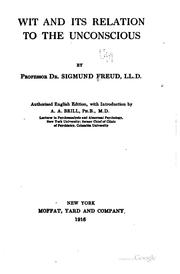
诙谐及其与无意识的关系 (1905)
- 作者
- 西格蒙德·弗洛伊德
- 首版
- 1905 年
- 国家/地区
- 奥地利
- Open Library
- 57 个版本
百科
《诙谐及其与无意识的关系》(德语:Der Witz und seine Beziehung zum Unbewußten) 是精神分析学创始人西格蒙德·弗洛伊德于 1905 年出版的一本关于诙谐(Witz)、喜剧(Komik)、幽默(Humor)的精神分析的书。 在作品中,弗洛伊德描述了诙谐的心理过程和技巧,并将它们与梦的工作和无意识的过程和技巧进行了比较。
内容
弗洛伊德声称“我们对诙谐的享受”表明了我们在更严肃的谈话中所压抑的东西。 弗洛伊德认为,诙谐的成功取决于一种心理花费,通过这种能量花费,诙谐可以让人克服压抑。
根据弗洛伊德的说法,理解诙谐技巧对于理解诙谐及其与无意识的关系至关重要,正是这些技巧才使得诙谐成为诙谐。 弗洛伊德还指出,听诙谐而开怀大笑的听众通常没有心情去探究笑话的技巧。
结构
本书分为“分析”、“综合”和“理论”三个部分。
第二部分讨论了诙谐的心理起源和动机,以及诙谐作为一种社会过程。
本书的第一部分包括对诙谐的技巧和倾向的讨论。
本书的最后一部分讨论了笑话与梦和无意识的关系。
影响
这本书在《探险活宝》第十季第九集“Blenanas”中被提及。泡泡糖公主给了芬恩一本书,并说她没有时间向他解释幽默的心理学。该集的标题为“Der Witz Und Seine Beziehung Zum Unter Bewussten”。
以上文字摘自维基百科「诙谐及其与无意识的关系」(去掉了参考文献等尾部小节),按 CC BY-SA 4.0 使用,作者为维基百科的各位编者。
中文维基百科的条目比较短,下面附上英文维基百科的内容(英文原文):
Jokes and Their Relation to the Unconscious (German: Der Witz und seine Beziehung zum Unbewußten) is a 1905 book on the psychoanalysis of jokes and humour by Sigmund Freud, the founder of psychoanalysis. It was published in German in 1905. The book's title in English is in accordance with the 1960 translation by James Strachey. In some other English translations the work is titled The Joke and Its Relation to the Unconscious or Wit and Its Relation to the Unconscious. In the work, Freud describes the psychological processes and techniques of jokes, which he compares to the processes and techniques of dreamwork and the unconscious. He assesses prior studies on jokes and establishes a characterization of jokes. Freud links these characteristics to psychodynamics and his understanding of the unconscious mind while reconciling new theoretic insights with his 1899 book The Interpretation of Dreams.
Context
Analysis on elements and functions of laughter and humor date back to Ancient Greece (384 BCE to 322 BCE) and Roman empire (106—43 B.C.E). Most notably, Plato, Aristotle, and Cicero formulated early theories on the function of humor and laughter and paved the way for further philosophers such as Thomas Hobbes (17th century) to expand their positions. Psychological and philosophical analyses of jokes were made by Jean Paul, Theodor Lipps, Theodor Vischer, and Kuno Fischer (19th to 20th century). Most of these analysis reconcile the joke with humor.
After publishing The Interpretation of Dreams in 1900, Freud started to work on seminal texts and the refinement of his theories. During the establishment of the book, Sigmund Freud additionally worked on two other literary works, including Bruchstück einer Hysterieanalyse (Fragment of a hysteria analysis), also known as the case of Dora, and Drei Abhandlungen der Sexualtheorie (Three treatises on sexual theory). These texts showcase an extension of The Interpretation of Dreams and the introduction of sexual motives into his theory. Jokes and Its Relation to the Unconscious similarly advances Freud's theoretical basis and introduces a development "von der Nachtseite der Träume auf die seelische Wachexistenz", meaning "from the night side of dreams to the waking existence of the soul", according to Peter-André Alt.
During the establishment of this book and other works Freud kept contact to friends such as Willhelm Fließ via the exchange of letters. It is hypothesized that within this discourse Fließ provoked the establishment of the book by criticizing Freud's theoretical basis of The Interpretation of Dreams. These comments mainly condemn that there are apparent jokes within dreams. Due to this critique, Freud strongly connected his theoretical knowledge of dreams with the term "Witzarbeit", translating to jokework within the first part of his book. "Eine so weitgehende Übereinstimmung wie die zwischen den Mitteln der Witzarbeit und denen der Traumarbeit wird kaum eine zufällige sein." ("A correspondence as far-reaching as that between the means of jokework and those of dreamwork can hardly be accidental.")
Contents
Freud claims that "our enjoyment of the joke" indicates what is being repressed in more serious talk. Freud argues that the success of the joke depends upon a psychic economy, whereby the joke allows one to overcome inhibitions.
According to Freud, understanding of joke technique is essential for understanding jokes and their relation to the unconscious; however, these techniques are what make a joke a joke. Freud also noted that the listener laughing really heartily at the joke will typically not be in the mood for investigating its technique.
Structure
The book is segmented into three parts: analytic, synthetic, and theoretic.
以上文字摘自英文维基百科「Jokes and Their Relation to the Unconscious」(有删节,去掉了参考文献等尾部小节),按 CC BY-SA 4.0 使用,作者为维基百科的各位编者。
资料卡
- 原题
- Der Witz und seine Beziehung zum Unbewußten
- 译者
- James Strachey
- 原作语言
- 德语
- 首次出版
- 1905 年
- 体裁
- 心理学
- 主题
- 精神分析学、笑话、幽默研究
资料卡来自 Wikidata Q1198113(CC0),众包数据,个别字段可能不全。