书单
百科
这个词条暂时没有中文维基百科条目,下面是英文维基百科的内容(英文原文):
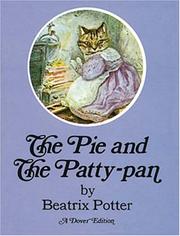
The Tale of the Pie and the Patty-Pan (originally, The Pie and the Patty-Pan) is a children's book written and illustrated by Beatrix Potter, and published by Frederick Warne & Co. in October 1905. It tells of a cat called Ribby and a tea party she holds for a dog called Duchess. Complications arise when Duchess tries to replace Ribby's mouse pie with her own veal and ham pie, and then believes she has swallowed a small tin pastry form called a patty-pan. Its themes are etiquette and social relations in a small town.
A version of the tale was composed by Potter in 1903, but set aside to develop other projects. In 1904, she failed to complete a book of nursery rhymes for Warnes, and the 1903 tale was accepted in its stead. Potter elaborated its setting and storyline, and developed the tale more fully before publication. The illustrations depict the cottages and gardens of Sawrey, a village in the Lake District near Potter's Hill Top farm, and have been described as some of the most exquisite Potter ever produced. Ribby was modelled on a cat living in Sawrey, Duchess on two Pomeranians belonging to Potter's neighbour Mrs Rogerson, Tabitha Twitchit on Potter's cat at Hill Top, and Dr Maggoty on the magpies in the London Zoological Gardens.
The tale was originally published in a larger size than Potter's previous books, but was reduced in the 1930s to bring it into line with the other books in the Peter Rabbit series. It was given its present title at that time. Potter declared the tale her next favourite to The Tailor of Gloucester. Beswick Pottery released porcelain figurines of the tale's characters through the latter half of the 20th century, and Schmid & Co. released a music box in the 1980s.
Development and publication
The Potter family summered occasionally at Lakefield, a country house in the village of Sawrey. "They came with their servants, their carriage and pair, and Miss Potter with her pony and phaeton," a village resident recalled. "Miss Potter was about the village sketching everywhere and often came to our house."
Close to Lakefield and off the road in their own enclosure were three dwellings known as Lakefield Cottages. Mr. Rogerson, a gardener and caretaker at Lakefield, lived in one of the cottages, and eventually his wife's two pedigree Pomeranians – Darkie and Duchess – would become the models for Potter's fictional Duchess. Darkie had a fine black mane, but Duchess was more intelligent and could sit up with a lump of sugar balanced on her nose.
In the summer of 1902, Potter sketched the interior of the third Lakefield Cottage belonging to a Mrs. Lord. These drawings included a watercolour and pen-and-ink sketches of the living-room, pen-and-ink sketches of the pots of geraniums on the living-room window sill, the entrance passage, the pantry, the stairs, some of the upstairs rooms, and details of the carved oak furniture. In some of the sketches Potter roughly outlined a cat. She also sketched the village including the sloping path down to the Lakefield Cottages and the post office door. These became the backgrounds for The Pie and The Patty-Pan.
During a rainy holiday in Hastings at the end of November 1903, Potter outlined a tale about a cat, a dog, and a tea party she called Something very very NICE. She discussed the Lakefield sketches as backgrounds for the tale with Warne. He proposed a large format volume similar to L. Leslie Brooke's Johnny Crow's Garden to do justice to the detail of the illustrations, but the entire project was set aside when The Tale of Benjamin Bunny and The Tale of Two Bad Mice were chosen for development and publication in 1904.
Potter had long wanted to develop a book of nursery rhymes, but such a project left Warne cold. Rhymes were already well represented in the firm's catalogue, and Warne felt Potter's unbridled enthusiasm for the genre would make the project a headache for him. In the past, he had tried to discourage Potter's interest in rhymes, believing her own stories superior, but she persisted. He reluctantly agreed to a book of rhymes for 1905, but Potter did not have it ready at the end of 1904, so he accepted the tea party tale instead. Early in 1905, it was decided the book would be published at the end of the year.
By March 1905, Potter was anxious to begin work on the tale. She thought the 1903 version too thin and rewrote the entire story, retaining Ribby the cat and Duchess the dog as the central characters while elaborating the setting and developing a stronger plot line. It was decided the tale would be published in a format slightly larger than her previous productions with ten full-colour illustrations and other illustrations in pen and sepia ink.
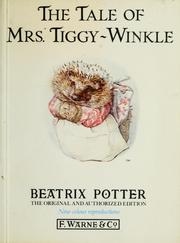
Like the tale's companion piece set in the Newlands Valley, The Tale of Mrs. Tiggy-Winkle, the cat and dog story is set in a real place, Near Sawrey, and is the only Potter tale to refer to Sawrey by name. Tabitha Twitchit disdainfully comments on her cousin's choice of party guest: "A little dog, indeed! Just as if there were no CATS in Sawrey!" The characters in the tale were modelled on real world individuals. Ribby's counterpart lived in Sawrey, and Tabitha Twitchit's counterpart lived at Hill Top, though her fictional shop is located in nearby Hawkshead. Dr. Maggotty was drawn from magpies in the London Zoological Gardens. Potter made notes in her sketchbook about the bird's anatomical structure and the colour of its feathers: "Brown black eye, nose a little hookier than jackdaw, less feathered." The bird's tail was over half its total length she noted, and its feathers were "very blue" and parts were green.
以上文字摘自英文维基百科「The Tale of the Pie and the Patty-Pan」(有删节,去掉了参考文献等尾部小节),按 CC BY-SA 4.0 使用,作者为维基百科的各位编者。
资料卡
- 原题
- The Tale of the Pie and the Patty-Pan
- 插图
- 碧雅翠丝·波特
- 原作语言
- 英语
- 体裁
- 儿童文学
- 首版出版社
- 费德里克·沃恩公司
- 前作
- 提姬·温克尔太太的故事
- 续作
- 渔夫杰里米先生的故事
资料卡来自 Wikidata Q4264077(CC0),众包数据,个别字段可能不全。
更多资料与书评
在哪读
同系列 / 前后作品
碧雅翠丝·波特 的其他作品
作者页 ›