书单
百科
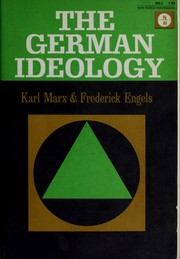
《德意志意识形态》(德语:Die deutsche Ideologie)是一部哲学著作。是卡尔·马克思和弗里德里希·恩格斯合著于1845年秋至1846年5月。著作在马克思和恩格斯生前没有出版,以手稿保存,没有总标题。于1932年在莫斯科出版。在1847年,《德意志意识形态》的部分内容在《威斯特伐里亚汽船》杂志8月和9月号发表过。在这部著作中,马克思和恩格斯第一次系统地论述了唯物史观的基本原理。
写作背景
在《关于费尔巴哈的提纲》和《德意志意识形态》之前,马克思、恩格斯曾经多次批判过黑格尔和青年黑格尔派哲学,对费尔巴哈的哲学也进行过批评和保留,但总的来说,是对费尔巴哈做了过高的评价。在1844年《1844年经济学哲学手稿》中,马克思还称赞费尔巴哈的《未来哲学原理》和《基督教的本质》等著作是“给社会主义提供哲学基础”;直到《家族》一书中,也还存在“对费尔巴哈的迷信”和“热烈的赞扬”。而在《关于费尔巴哈的提纲》和《德意志意识形态》中,费尔巴哈则成了马克思的批判对象。马克思公开树立起“新唯物主义”的旗帜,同一切旧哲学,包括费尔巴哈在内的一切旧唯物主义划清了界限。马克思说:“把我们从前的哲学信仰清算一下”,其中就包括费尔巴哈人本主义的影响。
简介
内容阐述作者的唯物主义历史观、批判分析当代的费尔巴哈、鲍威尔及施蒂纳的唯心主义历史观,批判民主社会主义或德国社会主义的各样代表哲学观点,表达对科学社会主义的认识。
以上文字摘自维基百科「德意志意識形態」(去掉了参考文献等尾部小节),按 CC BY-SA 4.0 使用,作者为维基百科的各位编者。
中文维基百科的条目比较短,下面附上英文维基百科的内容(英文原文):
The German Ideology (German: Die Deutsche Ideologie) is a work written by Karl Marx and Friedrich Engels in 1845–1846. After their failure to find a publisher, Marx famously remarked that they had left it to "the gnawing criticism of the mice"; it went unpublished during their lifetimes. The book as it is known today is an editorial construction from the manuscripts first published in their entirety in 1932 by the Marx-Engels Institute in Moscow. It marks the authors' definitive break from German idealism and sets the foundation for their later economic and political works, including The Communist Manifesto and Das Kapital.
The German Ideology is a major work of political and philosophical thought, considered the first to be recognizably "Marxist". In it, Marx and Engels articulate for the first time their materialist conception of history, also known as historical materialism. This new worldview posits that the material conditions of individuals' lives—specifically their mode of production—form the basis of society and that consciousness and ideas are products of these material realities, not the other way around. The famous formulation, "Life is not determined by consciousness, but consciousness by life," originates from this text.
The published book is typically divided into three parts, though the original manuscript was left incomplete and unrevised. Part I, "Feuerbach", contains the most systematic exposition of historical materialism and is the most frequently published and studied section, often being read in isolation. Parts II and III consist of detailed and often satirical polemics against some of their fellow German philosophers, particularly Bruno Bauer and Max Stirner, as well as a critique of "True Socialism". Marx and Engels accused these "Young Hegelians" of engaging in a purely philosophical struggle against "phrases" rather than critiquing the real, material world from which those phrases arose.
Background
The German Ideology was written during a period of intense intellectual development for both Karl Marx and Friedrich Engels, representing a key moment of "self-clarification" and the synthesis of their new worldview. In 1846, it was the first work to be written that could be described as distinctly "Marxist". Its creation followed a series of earlier writings in which Marx and Engels progressively broke from the German idealism of Georg Wilhelm Friedrich Hegel and the Young Hegelians.
Marx's early work, particularly his essays in the Deutsch–Französische Jahrbücher (1844), had already shifted the focus of critique from the state to "civil society" (bürgerliche Gesellschaft). In "On the Jewish Question", Marx argued that genuine human emancipation required overcoming the division between the abstract political citizen and the egoistic individual of civil society, a sphere dominated by private interests and economic conflict. In his "Contribution to the Critique of Hegel's Philosophy of Right", Marx identified the proletariat for the first time as the historical agent capable of achieving this "universal emancipation".
The concept of alienation, central to Marx's Economic and Philosophic Manuscripts of 1844, was also a crucial precursor. Marx rooted alienation not in consciousness (as did the Hegelians) but in the material process of labour under capitalism. He argued that under conditions of "alienated labour", the worker's own product confronts him as a hostile power, and the process of work itself becomes an external, oppressive activity. Crucially, Marx concluded that private property was not the cause but "the product, the result, the necessary consequence, of alienated labour".
以上文字摘自英文维基百科「The German Ideology」(有删节,去掉了参考文献等尾部小节),按 CC BY-SA 4.0 使用,作者为维基百科的各位编者。
资料卡
- 原题
- Die deutsche Ideologie
- 原作语言
- 德语
- 首次出版
- 1932 年
- 体裁
- 随笔
- 主题
- 马克思主义、历史唯物主义
资料卡来自 Wikidata Q470600(CC0),众包数据,个别字段可能不全。