书单
百科
这个词条暂时没有中文维基百科条目,下面是英文维基百科的内容(英文原文):
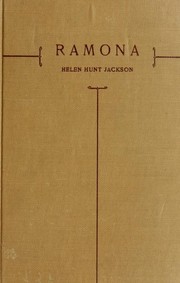
Ramona is an 1884 American novel written by Helen Hunt Jackson. Set in Southern California after the Mexican–American War and annexation of the territory by the United States, Ramona explores the life of a mixed-race Scottish–Native American orphan girl. The story was inspired by the marriage of Hugo Reid and Victoria Reid.
Originally serialized weekly in the Christian Union, the novel became immensely popular. It has had more than 300 printings, and has been adapted five times as a film. A play adaptation has been performed annually outdoors since 1923.
The novel's influence on the culture and image of Southern California was considerable. Its sentimental portrayal of Mexican elite colonial life contributed to establishing a unique cultural identity for the region. As its publication coincided with the arrival of railroad lines in the region, tourists used trains to visit sites thought to be associated with the novel.
Plot
In Southern California, shortly after the Mexican–American War, a Scottish-Native American orphan girl, Ramona, is raised by Señora Gonzaga Moreno, the sister of Ramona's deceased foster mother. Ramona is referred to as illegitimate in some summaries of the novel, but chapter 3 of the novel says that Ramona's parents were married by a priest in the San Gabriel Mission. Señora Moreno has raised Ramona as part of the family, giving her every luxury. Ramona's foster mother had requested this as her dying wish. Because Ramona has partial Native American heritage, Moreno reserves her love for her only child, Felipe Moreno, whom she adores. Señora Moreno identifies as Mexican of pure Spanish ancestry. She hates Americans since the United States' annexation of California following its victory in the war. They have disputed her claim to her lands, and have divided her huge rancho.
Señora Moreno delays the sheep shearing, a major event on the rancho, awaiting the arrival of a group of Native Americans from Temecula, whom she always hires for that work. The head of the Native American sheep shearers is Alessandro, son of Pablo Assís, chief of the tribe. Alessandro is portrayed as tall, wise, honest, and piously Catholic. Señora Moreno also awaits a priest, Father Salvierderra, from Santa Barbara. He will hear confessions of the workers and celebrate mass with them in her chapel after the shearing, before they return to Temecula.
Alessandro quickly falls in love with Ramona and agrees to stay on at the Rancho. In time, Ramona also falls in love with Alessandro. Señora Moreno opposes the marriage, as she does not want Ramona to marry a Native American. Realizing that Señora Moreno has never loved her, Ramona elopes with Alessandro.
The rest of the novel charts the two lovers' troubles. They have a daughter, and travel around Southern California trying to find a place to settle. In the aftermath of war, Alessandro's tribe is driven off their land, marking a new wave of European-American settlement in California from the United States. They endure misery and hardship, for the Americans who buy their land also demand their houses and their farm tools. Greedy Americans drive them off several homesteads, and they cannot find a permanent community that is not threatened by encroachment of American settlers. They finally move into the San Bernardino Mountains.
Alessandro slowly loses his mind, due to the forced relocations. He loves Ramona fiercely, and regrets having taken her away from relative comfort with Moreno. Their daughter, whose Native American name means "Eyes of the Sky", dies because an American doctor would not go to their homestead to treat her. They have another daughter, whom they name Ramona, but Alessandro still suffers. One day he rides off with the horse of an American, who follows him and shoots him, although he knew that Alessandro was mentally unbalanced.
After being away from the Moreno ranch for two years, the young widow is found by Felipe Moreno, whose mother has died. He brings her and her daughter Ramona back to his mother's estate. Felipe has always loved the elder Ramona and finds her more beautiful than ever. Although Ramona still loves the late Alessandro, she agrees to marry Felipe. They have several children together, but their favorite is Ramona, daughter of Alessandro.
Main characters
Ramona, Scottish-Native American orphan girl
Señora Gonzaga Moreno, sister of Ramona's dead foster mother
Felipe Moreno, Gonzaga Moreno's only child
Alessandro Assis, a young Native American sheepherder
Father Salvierderra, a Catholic priest
Major themes
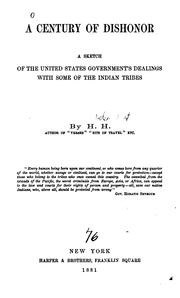
Jackson wrote Ramona three years after A Century of Dishonor, her non-fiction study of the mistreatment of Native Americans in the United States. By following that history with a novel, she sought to portray the Indian experience "in a way to move people's hearts." She wanted to arouse public opinion and concern for the betterment of their plight, much as Harriet Beecher Stowe's novel Uncle Tom's Cabin had done for enslaved African Americans. Her success in this effort was limited.
Jackson intended Ramona to appeal directly to the reader's emotions. The novel's political criticism was clear, but most readers were moved by its romantic vision of colonial California under Mexican rule. Jackson had become enamored of the Spanish missions in California, which she romanticized. The story's fictional vision of Franciscan churchmen, señoritas and caballeros permeated the novel and captured the imaginations of readers. Her novel characterized the Americans as villains and the Native Americans as "noble savages".
以上文字摘自英文维基百科「Ramona」(有删节,去掉了参考文献等尾部小节),按 CC BY-SA 4.0 使用,作者为维基百科的各位编者。
资料卡
- 原题
- Ramona
- 原作语言
- 英语
- 首次出版
- 1884 年
- 作品形式
- 长篇小说
- 首版出版社
- 利特尔-布朗公司
- 主题
- 孤儿
- 故事发生地
- 加利福尼亚州
资料卡来自 Wikidata Q2326609(CC0),众包数据,个别字段可能不全。
改编作品
电影1
名单来自 Wikidata(CC0):只列条目里写明「改编自 / 取材于」这本书的作品,不按名字猜;众包数据,可能不全。