书单
百科
这个词条暂时没有中文维基百科条目,下面是英文维基百科的内容(英文原文):
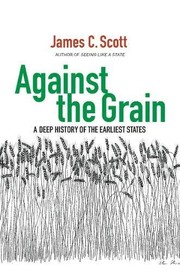
Against the Grain: A Deep History of the Earliest States is a 2017 book by James C. Scott that sets out to undermine what he calls the "standard civilizational narrative" that suggests humans chose to live settled lives based on intensive agriculture because this made people safer and more prosperous. Instead, he argues, people had to be forced to live in the early states, which were hierarchical, beset by malnutrition and disease, and often based on slavery. The book has been praised for re-opening some of the biggest questions in human history. A review in Science concludes that the book's thesis "is fascinating and represents an alternative, nuanced, if somewhat speculative, scenario on how civilized society came into being."
Background
Scott is among the world's most cited political scientists. He spent much of his career studying South-East Asia, and producing books such as The Art of Not Being Governed and Seeing Like a State. He has long been a critic of state power, having previously written on the subject of anarchism in works such as Two Cheers for Anarchism. Against the Grain returns to pre-history and discusses the conditions under which the first people stopped living as hunter-gatherers and moved to live in permanent settlements based on agriculture and administered by an elite. Scott challenges the conventional narrative that this change was welcome and voluntary for most participants.
Synopsis
Chapter 1. The Domestication of Fire, Plants, Animals, and… Us
Scott describes the gradual process by which early humans transformed their environment. He begins by recounting the impact of mankind's use of fire, calling it "a species monopoly and a trump card" and detailing its desirability for its capacity to reduce the radius of a meal by concentrating foodstuffs in a smaller area around human encampments. Scott describes the beginnings of sedentism in wetlands prior to the cultivation of cereal grains. He then tackles the 4,000-year "gap" between the cultivation of domesticated grains and the emergence of agricultural societies, claiming that it was in the best interests of early people to supplement their existing diets with cereal grains and other domesticated crops rather than to rely upon crops exclusively. He regards adaptability in subsistence strategies as a better option than early agriculture for ancestral humans.
Chapter 2. Landscaping the World: The Domus Complex
Scott's point in this chapter is that humans domesticated the planet more extensively than simply taming cattle and planting crops, and that this had deep consequences. He examines the changes that mankind has brought to its environment by employing artificial selection to develop plant types that are now unrecognizable from their progenitors and are also unable to survive without human care. People also domesticated animals by casting out those with undesired characteristics and cultivating that which pleases us. This changed animals both in behavior and physiologically, making them permanently docile and un-reactive, while also developing smaller brains. These changes have negative effects upon the animals themselves, though they do result in a positive effect in output for their domesticators.
Scott then turns to what he calls "Human Parallels" – ways in which human beings themselves might have been transformed by domestication. From the altered bone-structures of women who were forced into agricultural labor to general size-difference and proof of nutrition-deficits in post-agriculture mankind, Scott argues that humans have bred their own irreversible change. Scott speculates that we may ourselves have become more docile and less aware of our surroundings. He also argues that the needs of domesticated plants and animals almost make us slaves to their meticulously specific and daily needs.
Chapter 3. Zoonoses: A Perfect Epidemiological Storm
In this chapter, Scott emphasizes the idea of Agro-Pastoralism, i.e. "plowed fields and domestic animals". He questions why a hunter-gatherer, who (he believes) had a relatively good and fulfilling life, would turn to this. Subsistence farming is mundane and contains more drudgery than the hunter and gatherer societies. Scott then asserts that the reason why hunter-gatherer societies transformed into agro-pastoral societies was due to coercion by the state. He cites research on an archaeological site in Mesopotamia named Abu Hureyra. Scott concurs with other scholars in the field that "'[n]o hunter-gatherers occupying a productive locality with a range of wild foods able to provide for all seasons are likely to have started cultivating their caloric staples willingly.'" Finally, Scott also points out that early states were beset by zoonoses, i.e. diseases spread from animals to humans, that result in high morbidity rates.
Chapter 4. Agro-Ecology of the Early State
Scott explains in this chapter that many apparent achievements attributed by traditional scholars to the state were actually present before state formation. Scott states: "If civilization is judged an achievement of the state, and if archaic civilization means sedentism, farming, the domus, irrigation, and towns, then there is something radically wrong with the historical order. All of these human achievements of the Neolithic were in place well before we encounter anything like a state in Mesopotamia." Scott then gives his definition of a state, emphasizing the indicators "that point to territoriality and a specialized state apparatus: walls, tax collection, and officials." The Sumerian city of Uruk offers an example. Scott cites that in Uruk, early agriculture required a very difficult lifestyle. Many people had to be forced by the state to do hard labor, for instance, digging irrigation channels. As a result of this, warfare between rival polities was very prevalent during this period in order to gain slave labor or to take over areas that had already been irrigated.
以上文字摘自英文维基百科「Against the Grain: A Deep History of the Earliest States」(有删节,去掉了参考文献等尾部小节),按 CC BY-SA 4.0 使用,作者为维基百科的各位编者。
资料卡
- 原题
- Against the Grain
- 原作语言
- 英语
- 首次出版
- 2017 年 8 月 22 日
- 作品形式
- 历史书
- 体裁
- 随笔、历史类非小说
- 页数
- 312
- 主题
- 新石器革命
资料卡来自 Wikidata Q54488595(CC0),众包数据,个别字段可能不全。