书单
百科
这个词条暂时没有中文维基百科条目,下面是英文维基百科的内容(英文原文):
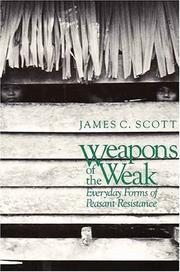
Weapons of the Weak: Everyday Forms of Peasant Resistance is a 1985 book on everyday forms of rural class conflict as illustrated in a Malaysian village, written by anthropologist James C. Scott and published by Yale University Press.
In Weapons of the Weak, Scott turns his attention to the daily, subtle forms of resistance employed by villagers, a shift from the traditionally studied grand narratives of revolutions and uprisings. His ethnographic research concentrates on seventy families in a Malaysian village, whose lives are profoundly affected by the introduction of irrigation and double cropping, leading to significant social changes.
The core of Scott's analysis lies in the various passive resistance strategies adopted by the villagers. These include: sabotage, foot-dragging, evasion, false compliance, pilfering, feigned ignorance, arson, dissimulation, and slander.
Though copyrighted in 1985, it was published in hardback in February 1986.
以上文字摘自英文维基百科「Weapons of the Weak」(去掉了参考文献等尾部小节),按 CC BY-SA 4.0 使用,作者为维基百科的各位编者。
资料卡
- 原题
- Weapons of the Weak 等 2 项
- 原作语言
- 英语
- 首次出版
- 1986 年
- 页数
- 389
- 主题
- 人类学
- 故事发生地
- 马来西亚
资料卡来自 Wikidata Q31930406(CC0),众包数据,个别字段可能不全。