 书单
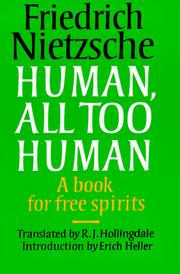
人性的,太人性的 (1878)
百科
人性的,太人性的(德语:Menschliches, Allzumenschliches ,英语:Human, All Too Human),副标题“一本献给自由精神的书”("Ein Buch für freie Geister"),是十九世纪的德国哲学家尼采的书,最初出版于1878年。第二部分“见解和箴言杂录”(Vermischte Meinungen und Sprüche),出版于1879年。第三部分“漫游者和他的影子”(Der Wanderer und sein Schatten)在随后的1880年出版。
因尼采把伏尔泰仰慕为自由的思想者,同时经历了与作曲家华格纳友谊的破碎,尼采1878年的第一个版本写道“为纪念伏尔泰1778年5月30日逝世日而作”。同时在第一部分引用了笛卡尔的《谈谈方法》。尼采随后在1886年将这三部分以两卷本出版,为各个部分加入了序言,并删除了对笛卡尔的引用和对伏尔泰的致意。
以上文字摘自维基百科「人性的,太人性的」(去掉了参考文献等尾部小节),按 CC BY-SA 4.0 使用,作者为维基百科的各位编者。
中文维基百科的条目比较短,下面附上英文维基百科的内容(英文原文):
Human, All Too Human: A Book for Free Spirits (German: Menschliches, Allzumenschliches: Ein Buch für freie Geister) is a book by 19th-century philosopher Friedrich Nietzsche, originally published in 1878. A second part, Assorted Opinions and Maxims (Vermischte Meinungen und Sprüche), was published in 1879, and a third part, The Wanderer and his Shadow (Der Wanderer und sein Schatten), followed in 1880.
The book is Nietzsche's first in the aphoristic style that would come to dominate his writings, discussing a variety of concepts in short paragraphs or sayings. Reflecting an admiration of Voltaire as a free thinker, but also a break in his friendship with composer Richard Wagner two years earlier, Nietzsche dedicated the original 1878 edition of Human, All Too Human "to the memory of Voltaire on the celebration of the anniversary of his death, May 30, 1778". Instead of a preface, the first part originally included a quotation from Descartes's Discourse on the Method. Nietzsche later republished all three parts as a two-volume edition in 1886, adding a preface to each volume, and removing the Descartes quotation as well as the dedication to Voltaire.
Background
In 1876, Nietzsche broke with Wagner, and in the same year his increasingly bad health (possibly the early effects of a brain tumor, or on another theory, CADASIL) compelled him to request a leave of absence from his academic duties at the University of Basel. In the autumn of 1876, he joined his friend Paul Rée in Sorrento, at the home of a wealthy patron of the arts, Malwida von Meysenbug, and began work on Human, All Too Human.
Inspiration
The genre of the aphorism was already well established at the time of writing this book: in the German tradition, Nietzsche's most important predecessor was a figure of the Enlightenment, Georg Christoph Lichtenberg, whose writing Nietzsche greatly admired. Nietzsche's work is indebted also to Schopenhauer's, particularly his Aphorisms for Practical Wisdom (1851). Above all else is the "debt to the French tradition of the aphorism – for Nietzsche's work is a deliberate turn westward". Nietzsche cites the French aphorists Jean de La Bruyère and Prosper Mérimée, and in Aphorism 221 celebrates Voltaire.
At the beginning of the second section, Nietzsche mentions La Rochefoucauld—named here as a model, the epitome of the aphorist—and it is known that Nietzsche had a copy of La Rochefoucauld's Sentences et maximes (1665) in his library. He had been reading it shortly before beginning to write Human, All Too Human, on the train ride to Sorrento. More than that of the other French aphorists mentioned, it is La Rochefoucauld's work that lies behind that of Nietzsche.
Style
Unlike his first book, The Birth of Tragedy, which was written in essay style, Human, All Too Human is a collection of aphorisms, a style which Nietzsche would use in many of his subsequent works.
The aphorisms of Human, All Too Human range from a few words to a few pages, but most are short paragraphs. The 638 aphorisms of the first installment are divided by subject into nine sections, with a short poem as an epilogue. The eponymous phrase itself appears in Aphorism 35 (originally conceived as the first aphorism) "when Nietzsche observes that maxims about human nature can help in overcoming life's hard moments". Implicit also, is a drive to overcome what is human, all too human through understanding it, through philosophy. The second and third installments are an additional 408 and 350 aphorisms respectively.
以上文字摘自英文维基百科「Human, All Too Human」(有删节,去掉了参考文献等尾部小节),按 CC BY-SA 4.0 使用,作者为维基百科的各位编者。
资料卡
- 原题
- Menschliches, Allzumenschliches
- 原作语言
- 德语
- 首次出版
- 1878 年
- 体裁
- 哲学
- 前作
- Untimely Meditations
- 续作
- 黎明
资料卡来自 Wikidata Q1364539(CC0),众包数据,个别字段可能不全。
更多资料与书评
在哪读
弗里德里希·尼采 的其他作品
作者页 ›相似的书

 豆瓣 #74
 豆瓣 #244
 豆瓣 #26
 豆瓣 #94