 书单
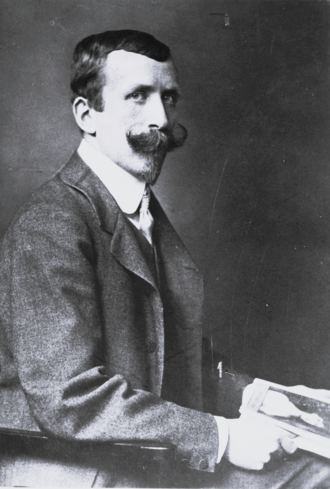
亨利希·曼
- 生卒
- 1871 – 1950
- 国籍
- 德国
- 外文名
- Heinrich Mann
照片:Photographer not credited,公有领域,来自维基共享资源「Heinrich Mann in seinen Münchner Jahren.png」(经缩小)。
生平与创作
亨利希·曼(Luiz (Ludwig) Heinrich Mann,1871年3月27日—1950年5月11日),也译作海因里希·曼,重要的德国作家之一,托马斯·曼的哥哥。曼出生于德国吕贝克,逝世于加利福尼亚州圣莫尼卡。
生平
在亨利希·曼出生之时,正是德法战争刚刚结束的时候。他在吕贝克长大,他的父亲从1877年开始是该市的经济与财政议员,直到1892年逝世。1884年,海因里希·曼在圣彼得堡旅行,接下来的一年有了第一部短篇小说,从1887年起开始写诗。在1889年从高级文理中学12年级停止了中学学习后,他开始在德累斯顿学习并从事书店行业的学徒,在1891到1892年,他在柏林的S.Fischer出版社进行了实习。1891年,刊物《社会》发表了他的第一篇评论文章。
海因里希·曼因为肺出血于1892年在一所疗养院中接受治疗,这一年中,他在《当代》上发表了一系列的评论文章。
1893年,亨利希·曼全家搬到了慕尼黑,在这里,他开始了更多的旅行。接下来的一年,有了他的小说《在一个家庭中》(In einer Familie)。1895年起,他在一家月刊作了编辑。1897年,有了作品《Das Wunderbare und andere Novellen》;1898年有了《一个罪行及其他故事》。从1899年到第一次世界大战爆发,他一直没有固定居所,但相对在意大利住得比较长一些。
以上文字摘自维基百科「亨利希·曼」(去掉了参考文献等尾部小节),按 CC BY-SA 4.0 使用,作者为维基百科的各位编者。
中文维基百科的条目比较短,下面附上英文维基百科的内容(英文原文):
Luiz Heinrich Mann (German: [ˈhaɪnʁɪç ˈman] ; March 27, 1871 – March 11, 1950), best known as simply Heinrich Mann, was a German-American writer known for his sociopolitical novels. From 1930 until 1933, he was president of the fine poetry division of the Prussian Academy of Arts. His fierce criticism of the growing Fascism and Nazism forced him to flee Germany after the Nazis came to power during 1933. He was the elder brother of writer Thomas Mann.
Early life
Born in Lübeck, as the first child of Senator Thomas Johann Heinrich Mann, grain merchant and finance minister of the Free City of Lübeck, a state of the German Empire, and Júlia da Silva Bruhns. He was the elder brother of the writer Thomas Mann with whom he had a lifelong rivalry. The Mann family was an affluent family of grain merchants of the Hanseatic city of Lübeck. After the death of his father, his mother relocated the family to Munich, where Heinrich began his career as a freier Schriftsteller (free writer). In 1914, he married a Czech actress, Maria "Mimi" Kanova. They divorced in 1930. Mimi, being Jewish, died from the consequences of a five-year detention in the concentration camp Theresienstadt.
Work and exile
Mann's essay on Émile Zola and the novel Der Untertan (published over the years 1912–1918) earned him much respect during the Weimar Republic in left-wing circles, since they demonstrated the author's antiwar and defeatist stance during World War I, while the latter satirized Imperial German society; both the novel and the essay became a major impulse for Thomas Mann to write Reflections of a Nonpolitical Man, a work supporting the efforts of the German Empire in the war and condemning Heinrich as one of "Civilisation's Literary Men" (Zivilisationsliteraten), the writers who served the West in its struggle against German culture; later Thomas called the novel an example of "national slander" and "ruthless aestheticism", yet the novel had admirers such as Kurt Tucholsky. During the revolution, Heinrich became a major supporter of Kurt Eisner, a social democrat revolutionary who proclaimed Bavaria a Socialist republic; after Eisner's assassination by a far-right activist, Mann spoke at Eisner's funeral.
Later, in 1930, his book Professor Unrat was freely adapted into the movie Der Blaue Engel (The Blue Angel). Carl Zuckmayer wrote the script, and Josef von Sternberg was the director. Mann wanted his paramour, the actress Trude Hesterberg, to play the main female part as the "actress" Lola Lola (named Rosa Fröhlich in the novel), but Marlene Dietrich was given the part, her first sound role. The film helped her achieve her breakthrough, including in Hollywood, and became an icon movie in film history.
Together with Albert Einstein and other celebrities during 1932, Mann was a signatory to the "Urgent Call for Unity", asking voters to reject the Nazis. Einstein and Mann had previously co-authored a letter during 1931 condemning the murder of Croatian scholar Milan Šufflay.
Mann became persona non grata in Nazi Germany and left before the Reichstag fire of 1933. He went to France where he lived in Paris and Nice. During the German occupation of France, he made his way to Marseille, from where Varian Fry helped him escape to Spain in September 1940. Assisted by Justus Rosenberg, Mann and his wife Nelly Kröger, nephew Golo Mann, and friends Alma Mahler-Werfel and Franz Werfel hiked for six hours, finally crossing the border at Port Bou. After arriving in Portugal, the group stayed in Monte Estoril at the Grande Hotel D'Itália between September 18 and October 4, 1940. On October 4, 1940, they boarded the S.S. Nea Hellas, headed for New York City.
以上文字摘自英文维基百科「Heinrich Mann」(有删节,去掉了参考文献等尾部小节),按 CC BY-SA 4.0 使用,作者为维基百科的各位编者。
资料卡
- 母语名
- Heinrich Mann
- 出生
- 1871 年 3 月 27 日
- 出生地
- 吕贝克
- 逝世
- 1950 年 3 月 11 日
- 逝世地
- 圣莫尼卡
- 职业
- 作家、诗人、小说家、散文家、编剧、传记作家、自传作者、剧作家 等 12 项
- 使用语言
- 德语
- 就读学校
- 弗里德里希·威廉大学
- 领域
- 诗歌、戏剧、翻译、新闻学、散文 等 6 项
- 配偶
- Maria Kanova(1912)、Nelly Mann(1939)
- 代表作
- Professor Unrat oder Das Ende eines Tyrannen(1905)、Der Untertan(1918)
- 获奖
- 东德国家奖
资料卡来自 Wikidata Q76480(CC0),众包数据,个别字段可能不全。
本站收录的作品(1)
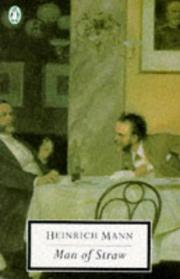
作品年表(2 本)
本站书库里署名亨利希·曼的书(Open Library 上至少 10 人加过书架的才收),按首版年份排(有本站书页的用 Wikidata 记的首版年,其余用 Open Library 的);年份偶尔记成后来的版本或译本,以原书为准。全部作品见 Open Library。
- 1905Professor Unrat书架 17
- 1918Der Untertan书架 10