 书单
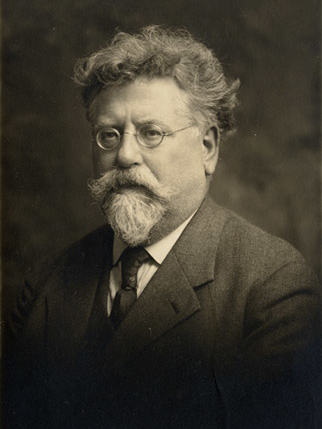
鲁道夫·拉克
- 生卒
- 1873 – 1958
- 国籍
- 德国
- 外文名
- Rudolf Rocker
照片:作者不详,公有领域,来自维基共享资源「Rudolf Rocker.jpg」(经缩小)。
生平与创作
这个词条暂时没有中文维基百科条目,下面是英文维基百科的内容(英文原文):
Johann Rudolf Rocker (German: [ˈʁɔkɐ]; March 25, 1873 – September 19, 1958) was a German anarchist writer and activist. He was born in Mainz to an artisan family.
His father died when he was a child, and his mother when he was in his teens, so he spent some time in an orphanage. As a youth he worked as a cabin boy on river boats and was then apprenticed as a typographer. He became involved in trade unionism and joined the Social Democratic Party of Germany (SPD) before coming under the influence of anarchists such as Mikhail Bakunin and Peter Kropotkin. With other libertarian socialist youth, he was expelled from the SPD, and his anarchist activism led to him fleeing Germany for Paris, where he came into contact with syndicalist and anarchist ideas and practices. In 1895, he moved to London. Apart from brief spells in Liverpool and elsewhere, he remained in East London for most of the next two decades, acting a key figure in the Yiddish-language anarchist scene there, including editing the Arbeter Fraynd periodical, publishing the key thinkers of anarchism, and organising strikes in the garment industry. In London, he formed a life partnership with Milly Witkop, a Ukraine-born anarchist from a Jewish background. During World War I, he was interned as an enemy alien and at the end of the war he was deported to the Netherlands.
In the 1920s, he was mainly based in Germany, where he was one of the architects of the syndicalist Free Workers' Union of Germany (FAUD) and its organ Der Syndikalist and a founder of the International Workers' Association (IWA). He became increasingly concerned with the rise of nationalism and fascism (he began work on his magnum opus Nationalism and Culture in this period) and left Germany in 1933 for the United States. In the US, he was active with the Yiddish Freie Arbeiter Stimme group, and was particularly involved in libertarian education and in solidarity with the Spanish Revolution against its fascist and Stalinist enemies. His classics Nationalism and Culture and Anarcho-Syndicalism were published in the 1930s. Having opposed both sides in First World War, as an anti-fascist he supported the Allies in the Second World War. After the war, he published Pioneers of American Freedom, a series of essays detailing the history of liberal and anarchist thought in the United States, seeking to debunk the idea that radical thought was foreign to American history and culture and had merely been imported by immigrants.
Early life
Rudolf Rocker was born to the lithographer Georg Philipp Rocker (1845–1877) and his wife Anna Margaretha née Naumann (1849–1887, daughter of Heinrich Naumann) as one of their four children, in Mainz, Hesse (now Rhineland-Palatinate), Germany, on March 25, 1873. (His siblings were Philipp, 1870–1873; Catharina Barbara, 20 March 1870 – 3 April 1870; and Friedrich, b. 1877). This Catholic, yet not particularly devout, family had a democratic and anti-Prussian tradition dating back to Rocker's grandfather, who participated in the March Revolution of 1848. When Georg Philipp died in 1877, just four years after Rocker's birth, the family managed to evade poverty primarily through the massive support by his mother's family.
In October 1884, the Rocker household was joined by his mother's new husband Ludwig Baumgartner. This marriage presented Rudolf with a half-brother, Ernest Ludwig Heinrich Baumgartner, with whom Rocker did not maintain close contact.
Rocker's mother died in February 1887. After his stepfather remarried soon thereafter, Rocker was put into an orphanage.
Rudolf Rocker, disgusted by the unconditional obedience demanded by the Catholic orphanage and drawn by the prospect of adventure, ran away from the orphanage twice. The first time he just wandered around in the woods around Mainz with occasional visits to the city to forage for food and was retrieved after three nights. The second time, which was at the age of fourteen and a reaction to the orphanage wanting him to be apprenticed as a tinsmith, he worked as a cabin-boy for Köln-Düsseldorfer Dampfschiffahrtsgesellschaft. He enjoyed leaving his hometown and traveling to places like Rotterdam. After he returned, he started an apprenticeship to become a typographer like his uncle Carl.
Early politics
Rocker's uncle, Carl Rudolf Naumann, had a substantial library consisting of socialist literature of all colors. Rocker was particularly impressed by the writings of Constantin Frantz, a federalist and opponent of Bismarck's centralized German Empire; Eugen Dühring, an anti-Marxist socialist, whose theories had some anarchist aspects; novels like Victor Hugo's Les Misérables and Edward Bellamy's Looking Backward; as well as the traditional socialist literature such as Karl Marx's Capital and Ferdinand Lasalle and August Bebel's writings. Rocker became a socialist and regularly discussed his ideas with others. His employer became the first person he converted to socialism.
Under the influence of his uncle, he joined the SPD and became active in the typographers' labor union in Mainz. He volunteered in the 1890 electoral campaign, which had to be organized in semi-clandestinity because of continuing government repression, helping the SPD candidate Franz Jöst retake the seat for the district Mainz-Oppenheim in the Reichstag. Because the seat was heavily contested, important SPD figures like August Bebel, Wilhelm Liebknecht, Georg von Vollmar, and Paul Singer visited the town to help Jöst and Rocker had a chance to see them speak.
以上文字摘自英文维基百科「Rudolf Rocker」(有删节,去掉了参考文献等尾部小节),按 CC BY-SA 4.0 使用,作者为维基百科的各位编者。
资料卡
- 出生
- 1873 年
- 出生地
- 美因茨
- 逝世
- 1958 年 9 月 19 日
- 逝世地
- Mohegan Colony 等 2 项
- 职业
- 历史学家、作家、经济学家、新闻工作者、工会会员、政治人物、无政府主义者
- 使用语言
- 意第绪语、德语
- 写作语言
- 意第绪语、德语
- 文学运动 / 流派
- 无政府工团主义、社会无政府主义
- 所属团体
- 国际工人协会、自由工人联盟
- 配偶
- Milly Witkop
- 代表作
- 民族主义与文化、Anarcho-Syndikalismus、Pioneers of American Freedom、Max Nettlau
资料卡来自 Wikidata Q213562(CC0),众包数据,个别字段可能不全。
本站收录的作品(1)
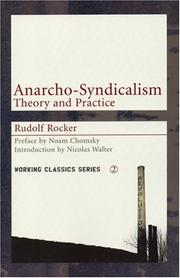
作品年表(1 本)
本站书库里署名鲁道夫·拉克的书(Open Library 上至少 10 人加过书架的才收),按首版年份排(有本站书页的用 Wikidata 记的首版年,其余用 Open Library 的);年份偶尔记成后来的版本或译本,以原书为准。全部作品见 Open Library。
- 1938Anarcho-syndicalism书架 17