 书单
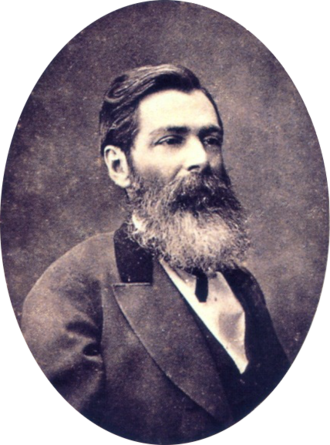
若泽·德·阿伦卡尔
- 生卒
- 1829 – 1877
- 国籍
- 巴西
- 外文名
- José de Alencar
照片:Alberto Henschel,公有领域,来自维基共享资源「Jose de Alencar.png」(经缩小)。
生平与创作
若泽·马蒂尼亚诺·德·阿伦卡尔(José Martiniano de Alencar,1829年5月1日—1877年12月12日)是巴西律师、政治家、演说家、小说家和剧作家。他被认为是19世纪最著名和最有影响力的巴西浪漫主义小说家之一,也是被称为“印第安主义”的文学传统的主要倡导者。有时他会在作品上署上笔名“Erasmo”。
生平
1829年出生于巴西东北部塞阿腊州的梅塞雅纳(今属 福塔雷萨)。1850年毕业于圣保罗法学院(今圣保罗大学前身)。在大学期间,他受到维克多·雨果、弗朗索瓦-勒内·德·夏多布里昂等法国浪漫主义文学的影响。
毕业后移居当时巴西帝国首都里约热内卢,成为律师和记者后进入政界,他于1868年至 1870年担任巴西司法部长,以反对废除奴隶制而闻名。他也曾计划成为参议员,但佩德罗二世以阿伦卡尔太年轻为借口从未任命他。
阿伦卡尔于1877年因肺结核死于里约热内卢。现今福塔雷萨的若泽·德·阿伦卡尔剧院以他的名字命名。
以上文字摘自维基百科「若澤·德·阿倫卡爾」(去掉了参考文献等尾部小节),按 CC BY-SA 4.0 使用,作者为维基百科的各位编者。
中文维基百科的条目比较短,下面附上英文维基百科的内容(英文原文):
José Martiniano de Alencar (1 May 1829 – 12 December 1877) was a Brazilian novelist, lawyer, politician, orator, and dramatist. He is considered to be one of the most famous and influential Brazilian Romantic novelists of the 19th century, and a major exponent of the literary tradition known as "Indianism". Sometimes he signed his works with the pen name Erasmo. He was patron of the 23rd chair of the Brazilian Academy of Letters.
Biography
José Martiniano de Alencar was born in Messejana, Fortaleza, Ceará, on May 1, 1829, to politician José Martiniano Pereira de Alencar and his cousin Ana Josefina de Alencar. His family was a rich and influential clan in Northeastern Brazil, his grandmother being famous landowner Barbara Pereira de Alencar, heroine of the Pernambucan Revolution. Moving to São Paulo in 1844, he graduated in Law at the Faculdade de Direito da Universidade de São Paulo in 1850 and started his career in law in Rio de Janeiro. Invited by his friend Francisco Otaviano, he became a collaborator for the journal Correio Mercantil. He also wrote many chronicles for the Diário do Rio de Janeiro and the Jornal do Commercio. Alencar would compile all the chronicles he wrote for these newspapers in 1874, under the name Ao Correr da Pena.
It was in the Diário do Rio de Janeiro, during the year of 1856, that Alencar gained notoriety, writing the Cartas sobre A Confederação dos Tamoios, under the pseudonym Ig. In them, he bitterly criticized the homonymous poem by Gonçalves de Magalhães. Even the Brazilian Emperor Pedro II, who esteemed Magalhães very much, participated in this polemic, albeit under a pseudonym. Also in 1856, he wrote and published under feuilleton form his first romance, Cinco Minutos, that received critical acclaim. In the following year, his breakthrough novel, O Guarani, was released; it would be adapted into a famous opera by Brazilian composer Antônio Carlos Gomes 13 years later. O Guarani would be first novel of what is informally called Alencar's "Indianist Trilogy" – a series of three novels by Alencar that focused on the foundations of the Brazilian nation, and on its indigenous peoples and culture. The other two novels, Iracema and Ubirajara, would be published on 1865 and 1874, respectively. Although called a trilogy, the three books are unrelated in their plots.
Alencar was affiliated with the Conservative Party of Brazil, being elected as a general deputy for Ceará. He was the Brazilian Minister of Justice from 1868 to 1870, having famously opposed the abolition of slavery. He also planned to be a senator, but Pedro II never appointed him, under the pretext of Alencar being too young; with his feelings hurt, he would abandon politics later.
He was very close friends with the also famous writer Machado de Assis, who wrote an article in 1866 praising his novel Iracema, that was published the year before, comparing his Indianist works to Gonçalves Dias, saying that "Alencar was in prose what Dias was in poetry". When Assis founded the Brazilian Academy of Letters in 1897, he chose Alencar as the patron of his chair.
In 1864 he married Georgina Augusta Cochrane, daughter of an eccentric British aristocrat. They would have six children – Augusto (who would be the Brazilian Minister of External Relations in 1919, and also the Brazilian ambassador in the United States from 1920 to 1924), Clarisse, Ceci, Elisa, Mário (who would be a journalist and writer, and a member of the Brazilian Academy of Letters) and Adélia. (It is implied that Mário de Alencar was actually an illegitimate son of Machado de Assis, a fact that inspired Assis to write his famous novel Dom Casmurro.)
Alencar died in Rio de Janeiro on 12 December 1877, a victim of tuberculosis. A theatre in Fortaleza, the Theatro José de Alencar, was named after him. His works were marked by the influence of his Roman Catholic faith.
以上文字摘自英文维基百科「José de Alencar」(去掉了参考文献等尾部小节),按 CC BY-SA 4.0 使用,作者为维基百科的各位编者。
资料卡
- 母语名
- José Martiniano de Alencar
- 笔名
- Erasmo
- 出生
- 1829 年 5 月 1 日
- 出生地
- 梅塞雅纳
- 逝世
- 1877 年 12 月 12 日
- 逝世地
- 里约热内卢
- 职业
- 新闻工作者、政治人物、律师、文学评论家、作家、小说家、剧作家、评论家
- 使用语言
- 葡萄牙语
- 写作语言
- 葡萄牙语
- 就读学校
- 圣保罗大学法学院
- 文学运动 / 流派
- 浪漫主义
- 创作体裁
- 演出法、年代记、自传
- 领域
- 虚构作品、文学批评、新闻学、诗歌
- 所属团体
- 巴西文学学院
- 配偶
- Georgiana Augusta Cochrane
- 代表作
- The Guarani、Iracema、Ubirajara
资料卡来自 Wikidata Q455703(CC0),众包数据,个别字段可能不全。
本站收录的作品(1)
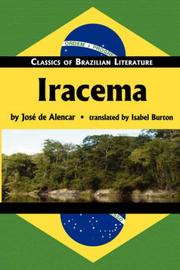
作品年表(2 本)
本站书库里署名若泽·德·阿伦卡尔的书(Open Library 上至少 10 人加过书架的才收),按首版年份排(有本站书页的用 Wikidata 记的首版年,其余用 Open Library 的);年份偶尔记成后来的版本或译本,以原书为准。全部作品见 Open Library。