 书单
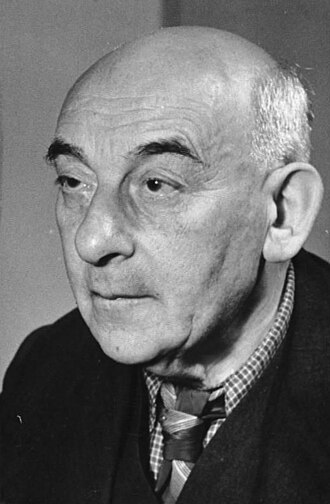
维克托·克伦佩勒
- 生卒
- 1881 – 1960
- 国籍
- 德国、东德
- 外文名
- Victor Klemperer
照片:Eva Kemlein,CC BY-SA 3.0 de,来自维基共享资源「Bundesarchiv Bild 183-16552-0002, Victor Klemperer.jpg」(经缩小)。
生平与创作
维克多·克伦佩勒(Victor Klemperer,1881年10月9日—1960年2月11日)是一位德国学者,他的日记于1995年在德国出版,他在日记中详细介绍了他在德意志帝国、魏玛共和国、纳粹德国和德意志民主共和国时期的生活。 他也是《第三帝国的语言》的作者。
早年
维克多·克伦佩勒出生在一个犹太人家庭。1914年到1915年,克伦佩勒在那不勒斯腓特烈二世大学教书。第一次世界大战期间他是一位军事志愿者。1920年,他成为了德累斯顿工业大学一名语言学教授。
1933年,纳粹德国颁布恢复专业公务员制度法,要将所有没有参加过第一次世界大战的非雅利安人教授开除。克伦佩勒因为曾参加一战的缘故暂且保留教职,不过在此期间他不能前往大学图书馆。不过最终克伦佩勒逐渐在压力下辞去工作并且退休。虽然他可以领取部分养老金,但钱很快就用完了,他和他的妻子不得不从事保洁工作。维克多·克伦佩勒的妻子不是犹太人。她是纳粹德国认可的一位“雅利安”德国人,这使得克伦佩勒免于灭顶之灾,不过这也降低了他妻子的社会地位。
以上文字摘自维基百科「维克多·克伦佩勒」(去掉了参考文献等尾部小节),按 CC BY-SA 4.0 使用,作者为维基百科的各位编者。
中文维基百科的条目比较短,下面附上英文维基百科的内容(英文原文):
Victor Klemperer (9 October 1881 – 11 February 1960) was a German philologist and diarist who chronicled life in the German Empire, the Weimar Republic, under Nazi Germany, and in East Germany. His detailed observations are among the most important firsthand accounts of everyday life under Nazism.
Dismissed from his university post as part of the racial policy of Nazi Germany, he survived persecution in Dresden, where he continued his diaries in secret. After 1945, he joined the Socialist Unity Party of Germany and later served as a cultural figure.
His diaries were published in 1995. In English translation, they are divided into three volumes: I Shall Bear Witness, To the Bitter End, and The Lesser Evil. The first two are standard sources on the Nazi era. His LTI – Lingua Tertii Imperii (Language of the Third Reich) shows how propaganda in Nazi Germany corrupted German language.
Early life and education
Klemperer was born in Landsberg an der Warthe (now Gorzów Wielkopolski, Poland) as the youngest child of a Jewish family. His parents were Wilhelm Klemperer, a rabbi, and Henriette née Frankel. Victor had three brothers (Georg, Felix, Berhold) and four sisters (Margarete, Hedwig, Marta, Valeska). His oldest brothers were physicians: Georg, 1865–1946, director of the hospital Berlin-Moabit (which treated Vladimir Lenin); Felix, 1866–1932, director of the hospital Berlin-Reinickendorf.
Victor was a cousin of the conductor Otto Klemperer, and first cousin once removed to Otto's son, the actor Werner Klemperer. In 1903 Klemperer converted to Protestantism for the first time, shortly thereafter returning to Judaism.
Victor Klemperer attended several gymnasia. He was a student of philosophy, Romance and German studies at the Ludwig-Maximilians-Universität München, the University of Geneva, the University of Paris, and Friedrich Wilhelm University of Berlin from 1902 to 1905, and later worked as a journalist and writer in Berlin, until he resumed his studies in Munich from 1912.
Though not a religious man, Victor Klemperer needed a religious identity, as Jew, Christian or religious dissenter, to support his career in German academia of the time. He chose Christianity as being most compatible with his primary sense of identity as, simply, a German, and became baptised again in Berlin in 1912.
He completed his doctorate (on Montesquieu) in 1913.
Career
Klemperer was habilitated under the supervision of Karl Vossler in 1914. From 1914 to 1915, he lectured at the University of Naples. He responded to the Italian entry into World War I by enlisting as a military volunteer in the Bavarian Army. From November 1915 to March 1916 he was deployed as an artilleryman on the Western Front in France. He was wounded and decorated for bravery by the Kingdom of Bavaria. After a recovery period in Germany, he served in the military censorship department of Prince Leopold of Bavaria's Ober Ost command in Kaunas and Leipzig.
He stayed in Munich from December 1918 to 1920, initially reporting for the national conservative and Pan-German Leipziger Neueste Nachrichten on the revolution in Bavaria (1918–1919) under the pseudonym Antibavaricus. He took a hostile attitude to both the People's State of Bavaria and the Bavarian Soviet Republic despite keeping company with some revolutionaries, whom he dismissed in his account as a "foreign legion". He regained his affiliation to the Ludwig-Maximilians-Universität München and after the revolution's suppression by the Freikorps, with whom he critically sympathised, he worked as an unpaid lecturer (Privatdozent) in modern French literature for one term of the 1919/20 academic year.
From 1920 until 1935 he was Professor of Romance Languages at the Technical University of Dresden.
以上文字摘自英文维基百科「Victor Klemperer」(有删节,去掉了参考文献等尾部小节),按 CC BY-SA 4.0 使用,作者为维基百科的各位编者。
资料卡
- 母语名
- Victor Klemperer
- 出生
- 1881 年 10 月 9 日
- 出生地
- 大波兰地区戈茹夫
- 逝世
- 1960 年 2 月 11 日
- 逝世地
- 德累斯顿
- 职业
- 罗曼学家、法语文学家、大学教师、政治人物、作家、自传作者、日记作者、新闻工作者 等 11 项
- 使用语言
- 德语、法语、意大利语、西班牙语 等 5 项
- 写作语言
- 德语
- 就读学校
- 柏林法国文理中学
- 领域
- 罗曼学
- 所属团体
- 东德科学院
- 配偶
- Eva Klemperer、Hadwig Kirchner-Klemperer
- 代表作
- 第三帝国的语言、Ich will Zeugnis ablegen bis zum letzten
- 获奖
- 东德国家奖;另有 4 项只有外文名
资料卡来自 Wikidata Q57442(CC0),众包数据,个别字段可能不全。
本站收录的作品(2)

作品年表(2 本)
本站书库里署名维克托·克伦佩勒的书(Open Library 上至少 10 人加过书架的才收),按首版年份排(有本站书页的用 Wikidata 记的首版年,其余用 Open Library 的);年份偶尔记成后来的版本或译本,以原书为准。全部作品见 Open Library。
- 1947第三帝国的语言LTI. Notizbuch eines Philologen书架 27
- 1995Ich will Zeugnis ablegen bis zum letzten书架 34