 书单
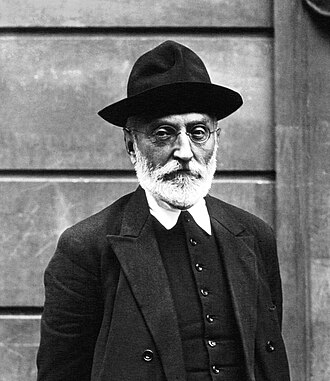
米格尔·德·乌纳穆诺
- 生卒
- 1864 – 1936
- 国籍
- 西班牙
- 外文名
- Miguel de Unamuno
照片:Agence de presse Meurisse,公有领域,来自维基共享资源「Miguel de Unamuno Meurisse 1925.jpg」(经缩小)。
生平与创作
米格尔·德·乌纳穆诺-胡戈(西班牙语:Miguel de Unamuno y Jugo,1864年9月29日—1936年12月31日)是一名西班牙作家、哲学家,98年一代(Generation of '98)代表作家。他是一个天主教徒。“那惊悸颤动不定的思想与吊诡冗长的文字表现,造成丰盈激情的诡论,也标示了他独特的风格。”
他生于巴斯克地区毕尔巴鄂。1880年进马德里大学学习。1884年获哲学和文学博士学位。1891年应聘为萨拉曼加大学古希腊语教授。1895年发表《论卡斯蒂主义》一文,探讨西班牙的改革问题。后成为决意为振兴和繁荣西班牙文学而努力的“一八九八年一代”作家的重要成员之一。1901年任萨拉曼加大学校长。1905年发表论著《堂吉诃德与桑丘传》,1913年发表《论生活的悲剧意义》,体现出存在主义哲学思想。同时创作大量小说、诗歌、戏剧、随笔等文学作品,阐发其哲学和社会改革思想。并被认为是现代西班牙杂文之父。他主张共和,反对独裁。1914年因批评政府腐败专权被免去校长职。1924年因抗议独裁者普利莫夺权被流放到加纳利群岛。后逃往法国。1930年普利莫垮台后回国,重任萨拉曼加大学校长。1936年因反对佛朗哥政权被软禁。12月在萨拉曼加病逝。
著作列表
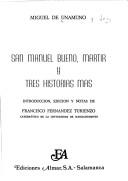
小说:《迷雾》、《亚伯·桑切斯》,《殉教者圣曼奴埃尔·布埃诺》、《战争中的和平》、《胡安兄弟》。
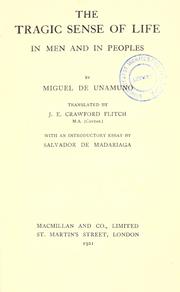
哲学论著:《生命的悲剧意识》(又译《生活的悲戚情感》。
诗集:《抒情十四行诗集》、《维拉斯克斯的基督》、《从富埃特本图拉到巴黎》、《流亡的谣曲》等。
以上文字摘自维基百科「米格尔·德·乌纳穆诺」(去掉了参考文献等尾部小节),按 CC BY-SA 4.0 使用,作者为维基百科的各位编者。
中文维基百科的条目比较短,下面附上英文维基百科的内容(英文原文):
Miguel de Unamuno y Jugo ( OO-nə-MOO-noh, Spanish: [miˈɣel de unaˈmuno i ˈxuɣo, wnaˈmuno j -]; 29 September 1864 – 31 December 1936) was a Spanish essayist, novelist, poet, playwright, philosopher and academic. His major philosophical essay was Tragic Sense of Life (1913), and his most famous novels were Abel Sánchez: The History of a Passion (1917), a modern exploration of the Cain and Abel story, and Mist (1914), which The Literary Encyclopedia calls "the most acclaimed Spanish Modernist novel".
Early life and education
Miguel de Unamuno was born in Bilbao, a port city of the Basque Country, Spain, the son of Félix de Unamuno and Salomé Jugo. As a young man, he was interested in the Basque language, which he could speak, and competed for a teaching position in the Instituto de Bilbao against Sabino Arana. The contest was finally won by the Basque scholar Resurrección María de Azkue.
Academic career
Unamuno worked in all major genres: the essay, the novel, poetry, and theater, and, as a modernist, contributed greatly to dissolving the boundaries between genres. There is some debate as to whether Unamuno was in fact a member of the Generation of '98, an ex post facto literary group of Spanish intellectuals and philosophers founded by José Martínez Ruiz (Azorín)—a group that includes, besides Azorín, Antonio Machado, Ramón Pérez de Ayala, Pío Baroja, Ramón del Valle-Inclán, Ramiro de Maeztu, and Ángel Ganivet, among others.
University of Salamanca
Unamuno would have preferred to be a philosophy professor, but was unable to get an academic appointment. Instead, in 1891, he became a Greek professor at University of Salamanca.
In 1901 Unamuno gave his well-known conference on the scientific and literary inviability of the Basque. According to Joxe Azurmendi, Unamuno went against the Basque language once his political views changed as a result of his reflection on Spain.
In addition to his writing, Unamuno played an important role in the intellectual life of Spain. He served as rector of the University of Salamanca for two periods: from 1900 to 1924 and 1930 to 1936, during a time of great social and political upheaval. During the 1910s and 1920s, he became one of the most passionate advocates of Spanish social liberalism. Unamuno linked his liberalism with his hometown of Bilbao, which, through its commerce and connection with the civilized world, Unamuno believed had developed an individualism and independent outlook in stark contrast to the narrow-mindedness of Carlist traditionalism. When in 1912 José Canalejas was assassinated by an anarchist, he blamed it on the fact that Spain lacked a "true liberal democratic party" and in 1914 denounced the Spanish nobility for their alleged philistinism. Along with many other Spanish writers and intellectuals, such as Benito Pérez Galdós, he was an outspoken supporter of the Allied cause during the First World War despite Spain's official neutrality. Unamuno viewed the war as a crusade not just against the Imperial Family of the German Empire, but against the monarchy in Spain, and intensified his attacks upon King Alfonso XIII.
以上文字摘自英文维基百科「Miguel de Unamuno」(有删节,去掉了参考文献等尾部小节),按 CC BY-SA 4.0 使用,作者为维基百科的各位编者。
资料卡
- 母语名
- Miguel de Unamuno y Jugo
- 本名
- Miguel de Unamuno
- 笔名
- Exóristo、Miguel de Unamuno
- 出生
- 1864 年 9 月 29 日
- 逝世
- 1936 年 12 月 31 日
- 逝世地
- Casa del Regidor Ovalle Prieto, Salamanca
- 职业
- 诗人、哲学家、作家、散文家、小说家、文学评论家、大学教师、剧作家 等 9 项
- 使用语言
- 西班牙语、巴斯克语
- 写作语言
- 西班牙语
- 就读学校
- Universidad Central
- 文学运动 / 流派
- 98世代
- 创作体裁
- 演出法
- 领域
- 哲学
- 所属团体
- 西班牙皇家语言学院;另有 1 项只有外文名
- 配偶
- Concha Lizárraga(1891)
- 受谁影响
- 索伦·克尔凯郭尔、亚瑟·叔本华、卡尔·马克思、费迪南德·拉萨尔、米哈伊尔·巴枯宁、希波的奥古斯丁、布莱兹·帕斯卡、马尔库斯·奥列里乌斯、让-雅克·卢梭、多明戈·福斯蒂诺·萨米恩托
- 代表作
- Del sentimiento trágico de la vida、迷雾
资料卡来自 Wikidata Q185085(CC0),众包数据,个别字段可能不全。
本站收录的作品(2)
作品年表(5 本)
本站书库里署名米格尔·德·乌纳穆诺的书(Open Library 上至少 10 人加过书架的才收),按首版年份排(有本站书页的用 Wikidata 记的首版年,其余用 Open Library 的);年份偶尔记成后来的版本或译本,以原书为准。全部作品见 Open Library。
- 1912Del sentimiento trágico de la vida en los hombres y en los pueblos书架 74
- 1914Niebla书架 58
- 1917Abel Sánchez书架 13
- 1921La tía Tula书架 16
- 1931San Manuel Bueno, mártir书架 44