 书单
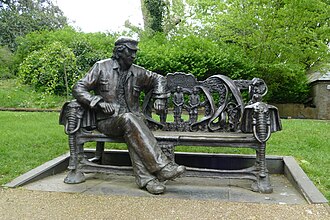
斯派克 米利甘
- 生卒
- 1918 – 2002
- 国籍
- 爱尔兰、英国
- 外文名
- Spike Milligan
照片:Loz Pycock from London, UK,CC BY-SA 2.0,来自维基共享资源「'A Conversation With Spike' by John Somerville, Stephens House and Gardens, Finchley (cropped).jpg」(经缩小)。
生平与创作
这个词条暂时没有中文维基百科条目,下面是英文维基百科的内容(英文原文):
Terence Alan "Spike" Milligan (16 April 1918 – 27 February 2002) was an English-Irish comedian, writer, musician, poet, playwright and actor. The son of an English mother and Irish father, he was born in British India, where he spent his childhood before relocating in 1931 to England, where he lived and worked for the majority of his life.
Milligan was the co-creator, main writer, and a principal cast member of the British radio comedy programme The Goon Show, performing a range of roles including the characters Eccles, Minnie Bannister and Count Jim Moriarty. He was the earliest-born and last surviving member of the Goons. He took his success with The Goon Show into television with Q5, a surreal sketch show credited as a major influence on the members of Monty Python's Flying Circus.
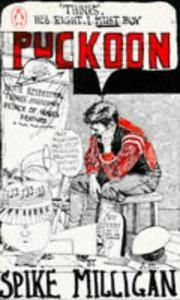
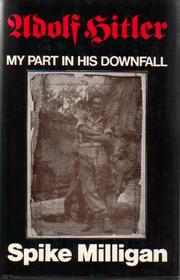
He wrote and edited many books, including Puckoon (1963) and a seven-volume autobiographical account of his time serving during the Second World War, beginning with Adolf Hitler: My Part in His Downfall (1971). He also wrote comical verse, with much of his poetry written for children, including Silly Verse for Kids (1959).
Early life and education
Terence Alan Milligan was born in Ahmednagar, India, on 16 April 1918 during the British Raj, the son of an Irish father, Leo Alphonso Milligan, a regimental sergeant-major in the British Indian Army, and English mother, Florence Mary Winifred (née Kettleband). He spent his childhood in Poona and later in Rangoon, then capital of British Burma. He was educated at the Convent of Jesus and Mary, Poona, and later at St Paul's High School, Rangoon. His father remained in the Indian Army after the end of the First World War, steadily promoted till "the family's lifestyle became almost lavish"; Milligan considered that "My old man lived the life of a gentleman on sergeant's pay".
After Army cuts meant his father's position was no longer required, Milligan travelled by sea, from India to England for the first time. He arrived on a winter's morning and was bemused by the climate, so different from India's, remembering the dock's "terrible noise, and everything so cold and grey." The Milligan family lived in England in somewhat straitened circumstances, Leo Milligan only being able to find "a poorly paid job in the Associated Press photo library"; Milligan recalled his mother being "often tense and angry... a domestic tyrant" due to having to manage on "next to no income". After moving to Brockley, south east London from the age of 12 in 1931, Milligan attended Brownhill Road School (later to be renamed Catford Boys School) and St Saviours School, Lewisham High Road.
After leaving school, he worked as a clerk in the Woolwich Arsenal, played the cornet and discovered jazz. He also joined the Young Communist League to demonstrate his hatred of Oswald Mosley's British Union of Fascists, who were gaining support near his home in south London. Disliking his first name, he began to call himself "Spike" after hearing the band Spike Jones and his City Slickers on Radio Luxembourg.
Second World War
During most of the late 1930s and early 1940s, Milligan performed as an amateur jazz vocalist, guitarist, and trumpeter before, during and after being called up for military service in the fight against Nazi Germany, but even then he wrote and performed comedy sketches as part of concerts to entertain troops. After his call-up, but before being sent abroad, he and fellow musician Harry Edgington (whose nickname "Edge-ying-Tong" inspired one of Milligan's most memorable musical creations, the "Ying Tong Song") composed surreal stories, filled with puns and skewed logic, as a way of staving off the boredom of life in barracks. A biographer describes his early dance band work: "He managed to croon like Bing Crosby and win a competition: he also played drums, guitar and trumpet, in which he was entirely self taught." Milligan acquired a double bass, on which he took lessons and would pluck in jazz sessions. He had perfect pitch.
During the Second World War, Milligan served as a signaller in D Battery (later 19 Battery), 56th Heavy Regiment, Royal Artillery, as Gunner Milligan, 954024. The unit was equipped with the obsolete First World War era BL 9.2-inch howitzer and based in Bexhill on the south coast of England. Milligan describes training with these guns in part two of Adolf Hitler: My Part in His Downfall, claiming that, during training, gun crews resorted to shouting "bang" in unison as they had no shells with which to practise.
Milligan's unit – now equipped with four BL 7.2-inch howitzers – saw action as part of the First Army in the North African campaign (during which Milligan was appointed lance bombardier) and then in the succeeding Italian campaign. In Italy, Milligan was about to be promoted to bombardier, when he was wounded in action at the Battle of Monte Cassino. Subsequently, hospitalised for a mortar wound to the right leg and shell shock, he was demoted back to gunner by an unsympathetic commanding officer (identified in his war diaries as Major Evan "Jumbo" Jenkins).
After hospitalisation, Milligan drifted through various rear-echelon military jobs in Italy, eventually joining the Central Pool of Artists (a group he described as composed "of bomb-happy squaddies") and becoming a full-time entertainer. He played the guitar with a jazz and comedy group called The Bill Hall Trio in concert parties for the troops. In May 1945, shortly after VE Day, Milligan was promoted to full Bombardier in recognition of his work in entertaining the troops.After being demobilised, Milligan remained in Italy playing with the trio but returned to Britain soon after. While he was with the CPA he began to write parodies of their mainstream plays, which displayed many of the key elements of what would later become The Goon Show (originally called Crazy People) with Peter Sellers, Harry Secombe and Michael Bentine.
以上文字摘自英文维基百科「Spike Milligan」(有删节,去掉了参考文献等尾部小节),按 CC BY-SA 4.0 使用,作者为维基百科的各位编者。
资料卡
- 本名
- Terence Alan Milligan
- 出生
- 1918 年 4 月 16 日
- 出生地
- 艾哈迈德讷格尔
- 逝世
- 2002 年 2 月 27 日
- 逝世地
- 拉伊
- 职业
- 编剧、作家、喜剧演员、新闻工作者、舞台演员、电影演员、诗人、演员 等 13 项
- 使用语言
- 英语
- 领域
- 演技、文学
- 所属团体
- 青年共产主义联盟 (英国)
- 获奖
- 大英帝国爵级司令勋章、大英帝国司令勋章;另有 1 项只有外文名
资料卡来自 Wikidata Q561401(CC0),众包数据,个别字段可能不全。
本站收录的作品(2)
作品年表(4 本)
本站书库里署名斯派克 米利甘的书(Open Library 上至少 10 人加过书架的才收),按首版年份排(有本站书页的用 Wikidata 记的首版年,其余用 Open Library 的);年份偶尔记成后来的版本或译本,以原书为准。全部作品见 Open Library。
- 1963Puckoon书架 24
- 1971Adolf Hitler书架 23
- 1971Adolf Hitler: my part in his downfall书架 17
- 年份不详Badjelly the witch书架 11