 书单
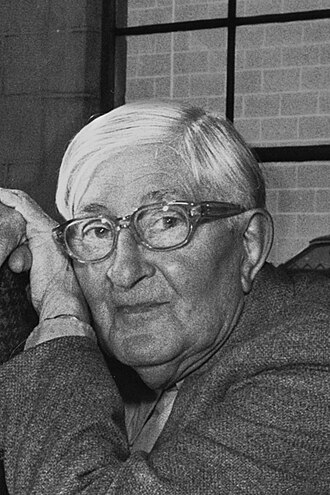
约瑟夫·艾伯斯
- 生卒
- 1888 – 1976
- 国籍
- 德国、美国
- 外文名
- Josef Albers
照片:Jthill84,CC BY-SA 4.0,来自维基共享资源「Josef Albers.jpg」(经缩小)。
生平与创作
约瑟夫·艾伯斯(Josef Albers,/ˈælbərz, ˈɑːl-/,德语:[ˈalbɐs];1888年3月19日—1976年3月25日)是生于德国的美国艺术家、教育家。在欧洲和美国,其作品成为20世纪一些极具影响力和深入的教育项目的基础。
生平
艾伯斯1888年出生于德国威斯特法伦州波特洛普的一个天主教工匠家庭。他曾就读柏林、埃森和慕尼黑的艺术学校;1920年进入包豪斯学习,一年之后由于在玻璃作品中的出色表现,成为包豪斯玻璃工作坊的技术指导教师。并于1923—33年间受聘为包豪斯学校的教师。由于二战前夜希特勒政权的重压,包豪斯于1933年8月关闭,约瑟夫·艾伯斯夫妇应邀前往美国的北卡罗来纳州黑山学院的实验人文学院任教。后来又陆续曾在哈佛大学、墨西哥大学、辛辛那提艺术学院等任教。1950年起,艾伯斯开始担任耶鲁大学设计系主任,并定居于康涅狄格州的纽黑文。于美国期间,艾伯斯创作了他著名的极简主义作品《向正方形致敬》(Homage to the Square)系列和《变换形式∕土砖》系列。其教学也影响了后来的大批美国近现代艺术家。约瑟夫·艾伯斯于1976年逝世于纽黑文。
以上文字摘自维基百科「约瑟夫·艾伯斯」(去掉了参考文献等尾部小节),按 CC BY-SA 4.0 使用,作者为维基百科的各位编者。
中文维基百科的条目比较短,下面附上英文维基百科的内容(英文原文):
Josef Albers ( AL-bərz, US also AHL-, German: [ˈjoːzɛf ˈʔalbɐs]; March 19, 1888 – March 25, 1976) was a German-born American artist and educator who is considered one of the most influential 20th-century art teachers in the United States. Born in 1888 in Bottrop, Westphalia, Germany, into a Roman Catholic family with a background in craftsmanship, Albers received practical training in diverse skills like engraving glass, plumbing, and wiring during his childhood. He later worked as a schoolteacher from 1908 to 1913 and received his first public commission in 1918 and moved to Munich in 1919.
In 1920, Albers joined the Weimar Bauhaus as a student and became a faculty member in 1922, teaching the principles of handicrafts. With the Bauhaus's move to Dessau in 1925, he was promoted to professor and married Anni Fleischmann, a student at the institution and a textile artist. Albers's work in Dessau included designing furniture and working with glass, collaborating with established artists like Paul Klee. Following the Bauhaus's closure under Nazi orders in 1933, Albers emigrated to the United States, and he taught at the experimental liberal arts institution Black Mountain College in North Carolina until 1949.
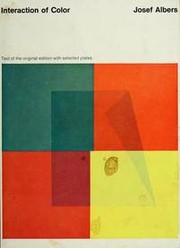
At Black Mountain, Albers taught students who would later go on to become prominent artists such as Ruth Asawa and Robert Rauschenberg, and invited contemporary American artists to teach in the summer seminar, including the choreographer Merce Cunningham and Harlem Renaissance painter Jacob Lawrence. In 1950, he left for Yale University to head the design department, contributing significantly to its graphic design program. Albers's teaching methodology, prioritizing practical experience and vision in design, had a profound impact on the development of postwar Western visual art, while his book Interaction of Color, published in 1963, is considered a seminal work on color theory.
In addition to being a teacher, Albers was an active abstract painter and theorist, best known for his series Homage to the Square, in which he explored chromatic interactions with nested squares, meticulously recording the colors used. He also created murals, such as those for the Corning Glass Building and the Time & Life Building in New York City. In 1970, he and his wife lived in Orange, Connecticut, where they continued to work in their private studio. In 1971, Albers was the first living artist to be given a solo show at the Metropolitan Museum of Art in New York. Albers died in his sleep on March 25, 1976, at the Yale New Haven Hospital after being admitted for a possible heart ailment.
Biography
Formative years in Westphalia
Albers was born into a Roman Catholic family of craftsmen in Bottrop, Westphalia, Germany, in 1888. His father, Lorenzo Albers, was variously a housepainter, carpenter, and handyman. His mother came from a family of blacksmiths. His childhood included practical training in engraving glass, plumbing, and wiring, giving Josef versatility and lifelong confidence in the handling and manipulation of diverse materials. He worked from 1908 to 1913 as a schoolteacher in his home town; he also trained as an art teacher at Königliche Kunstschule in Berlin, Germany, from 1913 to 1915. From 1916 to 1919 he began his work as a printmaker at the Kunstgewerbschule in Essen, where he learnt stained-glass making with Dutch artist Johan Thorn Prikker. In 1918 he received his first public commission, Rosa mystica ora pro nobis, a stained-glass window for a church in Bottrop. In 1919 he moved to Munich, Germany, to study at the Königliche Bayerische Akademie der Bildenden Kunst, where he was a pupil of Max Doerner and Franz Stuck.
以上文字摘自英文维基百科「Josef Albers」(有删节,去掉了参考文献等尾部小节),按 CC BY-SA 4.0 使用,作者为维基百科的各位编者。
资料卡
- 母语名
- Josef Albers
- 笔名
- Albers, Yozef、Albers, Joseph
- 出生
- 1888 年 3 月 19 日
- 出生地
- 博特罗普
- 逝世
- 1976 年 3 月 25 日
- 逝世地
- 纽黑文
- 职业
- 画家、大学教师、摄影师、设计师、版画家、雕塑家、玻璃艺术家、教育家 等 9 项
- 使用语言
- 德语
- 就读学校
- 慕尼黑美术学院、包豪斯、威廉·埃德·库宁学院
- 文学运动 / 流派
- 奥普艺术、抽象艺术
- 创作体裁
- 抽象艺术
- 领域
- 绘画
- 所属团体
- 美国艺术暨文学学会、美国文理科学院、美国抽象艺术家协会
- 配偶
- 安妮·亚伯斯(1925)
- 代表作
- Interaction of Color
- 获奖
- 美国文理科学院院士;另有 2 项只有外文名
资料卡来自 Wikidata Q170071(CC0),众包数据,个别字段可能不全。
本站收录的作品(1)
同时代的德国作家
Open Library 上的全部作品
正在读取…