 书单
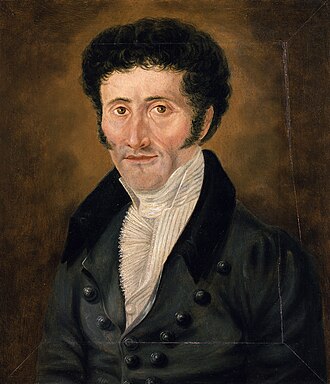
E·T·A·霍夫曼
- 生卒
- 1776 – 1822
- 国籍
- 普鲁士王国、德国
- 外文名
- E. T. A. Hoffmann
照片:E. T. A. Hoffmann,公有领域,来自维基共享资源「E. T. A. Hoffmann, autorretrato.jpg」(经缩小)。
生平与创作
恩斯特·特奥多尔·威廉·霍夫曼(德语:Ernst Theodor Wilhelm Hoffmann,1776年1月24日—1822年6月25日),笔名E·T·A·霍夫曼(德语:E. T. A. Hoffmann),德意志浪漫主义作家、法学家、作曲家、音乐评论人。一生共创作50多篇中短篇小说、3部长篇小说,此外还擅长作曲和绘画,写了2部歌剧、1部弥撒曲和1部交响乐。作品多神秘怪诞,以夸张手法对现实进行讽刺和揭露,所描写的人际关系的异化和采用的自由联想、内心独白、夸张荒诞、多层次结构等手法与后来的现代主义文学有很深的渊源。
法国作曲家雅克·奥芬巴赫著名戏剧《霍夫曼的故事》以及德国作曲家舒曼著名钢琴曲《克莱斯勒偶记》正是取材于霍夫曼的作品。俄国作曲家柴可夫斯基编写的一个芭蕾舞剧《胡桃夹子》,原作为霍夫曼的一部叫作《胡桃夹子与老鼠王》的故事。
作品
《胡桃夹子与老鼠王》
以上文字摘自维基百科「E·T·A·霍夫曼」(去掉了参考文献等尾部小节),按 CC BY-SA 4.0 使用,作者为维基百科的各位编者。
中文维基百科的条目比较短,下面附上英文维基百科的内容(英文原文):
Ernst Theodor Amadeus Hoffmann (born Ernst Theodor Wilhelm Hoffmann; 24 January 1776 – 25 June 1822) was a German Romantic author of fantasy and gothic horror, a jurist, composer, music critic and artist. His short story "The Sandman" is seen as a pioneering work of horror fiction, while his novella Mademoiselle de Scuderi is regarded as one of the earliest examples of crime fiction.
Several of his works have been reimagined in other media: He is the author of the novella The Nutcracker and the Mouse King, on which Pyotr Ilyich Tchaikovsky's ballet The Nutcracker is based. In addition, his stories form the basis of Jacques Offenbach's opera The Tales of Hoffmann, in which Hoffmann appears (heavily fictionalized) as the hero. The ballet Coppélia is based on two other stories that Hoffmann wrote, while Schumann's Kreisleriana is based on Hoffmann's character Johannes Kreisler.
Hoffmann's stories highly influenced 19th-century literature, and he is one of the major authors of the Romantic movement.
Life
Youth
Hoffmann's ancestors, both maternal and paternal, were jurists. His father, Christoph Ludwig Hoffmann (1736–97), was a barrister in Königsberg, Prussia (now Kaliningrad, Russia), as well as a poet and amateur musician who played the viola da gamba. In 1767, Christoph married his cousin, Lovisa Albertina Doerffer (1748–96). Ernst Theodor Wilhelm, born on 24 January 1776, was the youngest of three children, of whom the second died in infancy.
When his parents separated in 1778, his father went to Insterburg (now Chernyakhovsk) with his elder son, Johann Ludwig Hoffmann (1768–1822), while Hoffmann's mother stayed in Königsberg with her relatives: two aunts, Johanna Sophie Doerffer (1745–1803) and Charlotte Wilhelmine Doerffer (c. 1754–79) and their brother, Otto Wilhelm Doerffer (1741–1811), who were all unmarried. The trio raised the youngster.
The household, dominated by the uncle (whom Ernst nicknamed O Weh—"Oh dear!"—in a play on his initials "O.W."), was pietistic and uncongenial. Hoffmann was to regret his estrangement from his father. Nevertheless, he remembered his aunts with great affection, especially the younger, Charlotte, whom he nicknamed Tante Füßchen ("Aunt Tootsy-Wootsy"). Although she died when he was only three years old, he treasured her memory (a character in Hoffmann's Lebensansichten des Katers Murr is named after her) and embroidered stories about her to such an extent that later biographers sometimes assumed her to be imaginary, until proof of her existence was found after World War II.
Between 1781 and 1792, he attended the Lutheran school or Burgschule, where he made good progress in classics. Ernst showed great talent for piano-playing, and busied himself with writing and drawing. The provincial setting was not, however, conducive to technical progress, and despite his many-sided talents he remained rather ignorant of both classical forms and of the new artistic ideas that were developing in Germany. He had, however, read Schiller, Goethe, Swift, Sterne, Rousseau and Jean Paul, and wrote part of a novel titled Der Geheimnisvolle.
Around 1787, he became friends with Theodor Gottlieb von Hippel the Younger (1775–1843), the son of a pastor, and nephew of Theodor Gottlieb von Hippel the Elder, the well-known writer friend of Immanuel Kant. During the year 1792, both attended some of Kant's lectures at the University of Königsberg. Their friendship, although often tested by an increasing social difference, was to be lifelong.
In 1794, Hoffmann became enamored of Dora Hatt, a married woman to whom he had given music lessons. She was ten years older, and gave birth to her sixth child in 1795. In February 1796, her family protested against his attentions and, with his hesitant consent, asked another of his uncles to arrange employment for him in Glogau, Prussian Silesia (now Głogów, Poland).
以上文字摘自英文维基百科「E. T. A. Hoffmann」(有删节,去掉了参考文献等尾部小节),按 CC BY-SA 4.0 使用,作者为维基百科的各位编者。
资料卡
- 母语名
- Ernst Theodor Amadeus Hoffmann
- 本名
- Ernst Theodor Wilhelm Hoffmann
- 笔名
- E. T. A. Hoffmann
- 出生
- 1776 年 1 月 24 日
- 出生地
- 柯尼斯堡
- 逝世
- 1822 年
- 逝世地
- 柏林
- 职业
- 作曲家、法官、画家、儿童文学作家、作家、指挥家、科幻作家、小说家 等 16 项
- 使用语言
- 德语
- 写作语言
- 德语
- 就读学校
- 柯尼斯堡大学
- 文学运动 / 流派
- 浪漫主义、德国浪漫主义、浪漫主义文学
- 创作体裁
- 恐怖故事、童话、西洋穴怪图像
- 领域
- 散文、音乐、音乐评论、指挥、绘画
- 配偶
- Maria Thekla Michaelina Hoffmann
- 代表作
- Undine、The Devil's Elixirs、胡桃钳与老鼠王、Mademoiselle de Scuderi、睡魔、The Golden Pot、Master Flea
资料卡来自 Wikidata Q150471(CC0),众包数据,个别字段可能不全。
本站收录的作品(1)
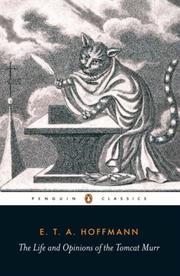
作品年表(5 本)
本站书库里署名E·T·A·霍夫曼的书(Open Library 上至少 10 人加过书架的才收),其中 3 本记的年份比作者去世晚 50 年以上或者早于他出生(多半是后世的版本、译本或占位年份),不列年份,按首版年份排(有本站书页的用 Wikidata 记的首版年,其余用 Open Library 的);年份偶尔记成后来的版本或译本,以原书为准。全部作品见 Open Library。