 书单
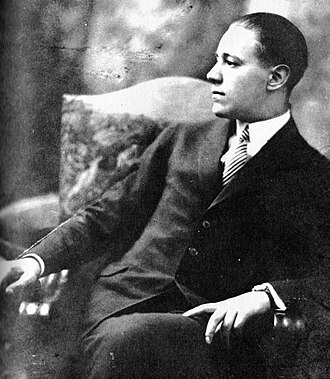
奥当·霍尔瓦
- 生卒
- 1901 – 1938
- 国籍
- 匈牙利、德国
- 外文名
- Ödön von Horváth
照片:作者不详,CC BY-SA 3.0,来自维基共享资源「Ödön von Horváth.jpg」(经缩小)。
生平与创作
这个词条暂时没有中文维基百科条目,下面是英文维基百科的内容(英文原文):
Edmund Josef von Horváth (9 December 1901 – 1 June 1938) was an Austro-Hungarian playwright and novelist who wrote in German, and went by the nom de plume Ödön von Horváth (German pronunciation: [ˈøːdœn fɔn ˈhɔʁvaːt]). He was one of the most critically admired writers of his generation prior to his untimely death. He enjoyed a series of successes on the stage with socially poignant and romantic plays, including Revolte auf Côte 3018 (1927), Sladek (1929), Italienische Nacht (1930), Hin und Her (1934), and Der Jüngste Tag (1937). His novels include Der ewige Spießer (1930), Ein Kind unserer Zeit (1938), and Jugend ohne Gott (1937).
Early life and education
Ödön von Horváth was the eldest son of an Austro-Hungarian diplomat of Hungarian origins from Slavonia, Edmund (Ödön) Josef Horváth, and Maria Lulu Hermine (Prehnal) Horváth, who was from an Austro-Hungarian military family.
From 1908, Ödön attended elementary school in Budapest, and later attended the Rákóczianum, where his education was in the Hungarian language. In 1909, his father was ennobled and assigned to Munich, unaccompanied. In 1913, Horváth attended secondary school in Pressburg and Vienna, where he learned German as a second language, and earned the Matura (secondary school diploma) then reunited with his parents at Murnau am Staffelsee, in Upper Bavaria; from 1919, Horváth studied at LMU Munich.
Later life and death
He started writing as a student, from 1920. After quitting university without a degree in early 1922, he moved to Berlin. Later, he lived in Salzburg and Murnau am Staffelsee. In 1931, he was awarded, along with Erik Reger, the Kleist Prize. In 1933, at the beginning of the Nazi regime in Germany, he relocated to Vienna. Following the annexation of the Federal State of Austria with Nazi Germany in 1938, Horváth emigrated to Paris.
Horváth was hit by a falling branch from a tree and killed during a thunderstorm on the Champs-Élysées in Paris, opposite the Théâtre Marigny, in June 1938. Ironically, only a few days earlier, Horváth had said to a friend: "I am not so afraid of the Nazis...There are worse things one can be afraid of, namely things one is afraid of without knowing why. For instance, I am afraid of streets. Roads can be hostile to one, can destroy one. Streets scare me." And a few years earlier, Horváth had written poetry about lightning: "Yes, thunder, that it can do. And bolt and storm. Terror and destruction."
Horváth was buried in the Saint-Ouen Cemetery, in northern Paris. In 1988, on the 50th anniversary of his death, his remains were transferred to Vienna and reinterred at the Heiligenstädter Friedhof.
Literary themes
Important topics in Horváth's works were popular culture, politics, and history. He especially tried to warn of the rise of Fascism in Europe and its dangers. Among Horváth's more enduringly popular works, Jugend ohne Gott (Youth Without God) describes the youth in Nazi Germany from the point of view of a disgruntled teacher who initially is an opportunist but is helpless against the racist and militaristic Nazi propaganda that dehumanizes his pupils.
The English title of his novel Ein Kind unserer Zeit (A Child of Our Time) was used by Michael Tippett for his oratorio (1939–1941), composed during World War II.
Works
Plays
Das Buch der Tänze, 1920
Mord in der Mohrengasse, 1923
Zur schönen Aussicht, 1926
Revolte auf Côte 3018 (Revolt on Hill 3018), 1927; rewritten as Die Bergbahn (The Mountain Railway), 1929
Sladek der schwarze Reichswehrmann, 1929, originally Sladek oder Die schwarze Armee (Sladek in volume Plays One, translation by Penny Black, Oberon, 2000, ISBN 1-84002-133-0)
Rund um den Kongreß, 1929 (A Sexual Congress in volume Plays One, translation by Penny Black, Oberon, 2000, ISBN 1-84002-133-0)
Italienische Nacht, 1930 (Italian Night in volume Plays Two, Oberon, 2000, ISBN 1-84002-152-7)
Geschichten aus dem Wiener Wald (Tales from the Vienna Woods), 1931, winner of the Kleist Prize the same year; available as well in volume Plays Two, Oberon, 2000, ISBN 1-84002-152-7)
Glaube, Liebe, Hoffnung, 1932 (Faith, Hope, and Charity in volume Four Plays, PAJ Publications, 1986, ISBN 1-55554-002-3)
Kasimir und Karoline, 1932 (Kasimir and Karoline in volume Four Plays, PAJ Publications, 1986, ISBN 1-55554-002-3)
Die Unbekannte aus der Seine, 1933
Hin und Her, 1934
Don Juan kommt aus dem Krieg, 1936 (Don Juan Comes Back From the War, Faber & Faber, 1978, ISBN 0-571-11301-X)
Figaro läßt sich scheiden, 1936. Giselher Klebe wrote the libretto and composed his 1963 opera of the same name based on this work; Elena Langer's 2016 opera Figaro Gets a Divorce, to a libretto by David Pountney, is also largely based on the play. (Figaro Gets a Divorce in volume Four Plays, PAJ Publications, 1986, ISBN 1-55554-002-3)
Pompeji. Komödie eines Erdbebens, 1937
Ein Dorf ohne Männer, 1937
Himmelwärts, 1937
Der Jüngste Tag, 1937 (Giselher Klebe composed his 1980 opera of the same name based on this work; Lore Klebe wrote the libretto) (Judgement Day in volume Four Plays, PAJ Publications, 1986, ISBN 1-55554-002-3)
Novels
Sechsunddreißig Stunden, 1929
Der ewige Spießer, 1930 (The Eternal Philistine, 2011)
Jugend ohne Gott, 1937 (The Age of the Fish, 1939)
Ein Kind unserer Zeit, 1938 (A Child of Our Time, 1939)
Other prose
Sportmärchen, 1924–1926
Interview, 1932
Gebrauchsanweisung, 1932
Quotes
A few select quotes amongst many by Horváth:
"Nothing conveys the feeling of infinity as much as stupidity does." (Motto of Geschichten aus dem Wienerwald)
"Eigentlich bin ich ganz anders, nur komme ich so selten dazu." "Actually what I'm really like is very different. I just so rarely find time for it." (From Zur schönen Aussicht)
Ödön von Horváth was once walking in the Bavarian Alps when he discovered the skeleton of a long dead man with his knapsack still intact. Von Horváth opened the knapsack and found a postcard reading "Having a wonderful time". Asked by friends what he did with it, von Horváth replied "I posted it".
以上文字摘自英文维基百科「Ödön von Horváth」(有删节,去掉了参考文献等尾部小节),按 CC BY-SA 4.0 使用,作者为维基百科的各位编者。
资料卡
- 母语名
- Ödön von Horváth
- 本名
- Edmund Josef von Horváth
- 出生
- 1901 年 12 月 9 日
- 出生地
- Sušak
- 逝世
- 1938 年 6 月 1 日
- 逝世地
- 香榭丽舍大街
- 职业
- 剧作家、作家、编剧
- 使用语言
- 匈牙利语、德语
- 写作语言
- 德语
- 就读学校
- 慕尼黑大学
- 领域
- 表演艺术、德国学、文学、戏剧
- 配偶
- Maria Elsner(1933)
- 代表作
- Jugend ohne Gott、Kasimir and Karoline
- 获奖
- 克莱斯特奖(1931)
资料卡来自 Wikidata Q84455(CC0),众包数据,个别字段可能不全。
本站收录的作品(1)
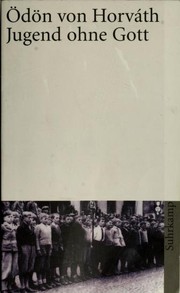
作品年表(1 本)
本站书库里署名奥当·霍尔瓦的书(Open Library 上至少 10 人加过书架的才收),按首版年份排(有本站书页的用 Wikidata 记的首版年,其余用 Open Library 的);年份偶尔记成后来的版本或译本,以原书为准。全部作品见 Open Library。
- 1937Jugend ohne Gott书架 17