 书单
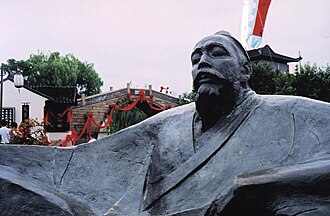
张继
- 生卒
- 712 – 779
- 国籍
- 唐朝
- 外文名
- Zhang Ji
照片:Gisling,CC BY-SA 3.0,来自维基共享资源「Zhang Ji.jpg」(经缩小)。
生平与创作
张继(?—779年),字懿孙,襄州襄阳(今湖北襄阳)人,一说南阳人,盛唐末诗人。
生平
张继生年已不可考。天宝十二年(753年)进士,登进士第后是否担任官职已不可考,只知曾游历会稽、吴中、苏州等地。
大历四、五年间,在武昌担任官职,与皇甫冉交好,二人互有写诗唱酬。后检校祠部员外郎,在洪州(今江西南昌市)任判官,负责财政。大历末年,与妻子相继死于洪州。
文学成就
有《张祠部诗集》一卷。在唐代诗人中,张继是一位相当出色的诗人,宋人叶梦得《石林诗话》记载其诗在南宋时有三十多首。《全唐诗》中,有四十余首。高仲武评张继诗:“员外累代词伯,积习弓裘。其于为文,不自雕饰。及尔登第,秀发当时。诗体清迥,有道者风。”“比兴深矣。”《枫桥夜泊》是他最著名的诗,此千古名篇让苏州寒山寺名扬海内外。
以上文字摘自维基百科「張繼 (唐朝)」(去掉了参考文献等尾部小节),按 CC BY-SA 4.0 使用,作者为维基百科的各位编者。
中文维基百科的条目比较短,下面附上英文维基百科的内容(英文原文):
Zhang Ji (traditional Chinese: 張繼; simplified Chinese: 张继; pinyin: Zhāng Jì; Wade–Giles: Chang Chi; fl.Tooltip floruit 8th century), courtesy name Yisun (懿孙), was a Chinese poet born in Xiangyang during the Tang dynasty.
Little is known of his life; his approximate dates are 712–715 to 779; he is known to have passed the jinshi examination in 753. He rose to be a secretary in the Board of Revenue.
He is incorrectly credited under the name Chang Tsi as the author of the original Chinese text for the second movement of Das Lied von der Erde by Gustav Mahler. The actual author of the poem used by Mahler was Qian Qi.
Poetry
Zhang is correctly credited with one poem which was included in the classic anthology Three Hundred Tang Poems, which was translated by Witter Bynner as "A Night-mooring near Maple Bridge" (楓橋夜泊) which references the Maple Bridge (楓橋), in Suzhou(蘇州) near the Hanshan Temple and its bells, which became famous because of this poem.
Japanese poets used some of his poems for Japanese typical Shigin singing-style poetry.
以上文字摘自英文维基百科「Zhang Ji (poet from Hubei)」(去掉了参考文献等尾部小节),按 CC BY-SA 4.0 使用,作者为维基百科的各位编者。
资料卡
- 出生
- 712 年
- 逝世
- 779 年
- 逝世地
- 洪州
- 职业
- 诗人、作家、官员
- 代表作
- 枫桥夜泊
资料卡来自 Wikidata Q711236(CC0),众包数据,个别字段可能不全。