书单
百科
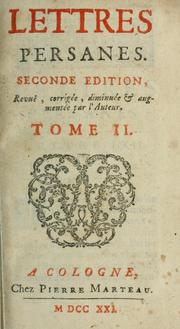
《波斯人信札》(法语:Lettres persanes),也被翻译成《波斯人通信集》、《波斯书简》,是孟德斯鸠的著作,以多名波斯人通信的格式写成。全书共有161封信,时间跨度为从1711年到1720年的九年。该书首先于1721年匿名发表,以局外人的视角探讨了法国生活的不开化。该书是启蒙运动的产物,质疑了教会的权威,而世俗国家则在兴起。
《波斯人信札》是孟德斯鸠的唯一的小说,由一位波斯贵族青年郁斯贝克和黎加游历法国旅游期间,不断写信给朋友,或传授心得,或交代仆人阉奴事项。第一封信是郁斯贝克寄友人吕斯当,以证明他旅行的目的在于求知,后来的每封信寄出的对象都有所不同,目的也不尽相同,有时内容常流于淫欲。同时孟德斯鸠又以郁斯贝克对其妻妾的残害,批判了当时波斯的风俗。
孟德斯鸠因《波斯人信札》的出版而进入巴黎的上流社会,成为巴黎沙龙的常客,三十八岁时,入选法兰西学院院士。
汉译本
1915年林纾与王庆骥合译有《鱼雁抉微》,即孟德斯鸠的《波斯人信札》,译序中称此书是“幻为与书之体”,又说“孟氏者,孤愤人也。”。此译本是林纾晚期作品,连载于1916年商务印书馆出版的《东方杂志》第十二卷第九号(1915年9月)至第十四卷第八号(1917年8月),一共连载17次,全译161封信。钱钟书挖苦《鱼雁抉微》“经过林纾六十岁后没精打采的翻译,它们竟像《鱼雁抉微》里嘲笑的神学著作,仿佛能和安眠药比赛功效。”罗大冈亦译有《波斯人信札》。
以上文字摘自维基百科「波斯人信札」(去掉了参考文献等尾部小节),按 CC BY-SA 4.0 使用,作者为维基百科的各位编者。
中文维基百科的条目比较短,下面附上英文维基百科的内容(英文原文):
Persian Letters (French: Lettres persanes) is a satirical work, published in 1721, by Baron Charles de Montesquieu, recounting the experiences of two fictional Persian noblemen, Uzbek and Rica, who spend several years in France under Louis XIV and the Regency.
Plot summary
In 1711, Uzbek leaves his seraglio in Isfahan to make the long journey to France, accompanied by his young friend Rica. He leaves behind five wives (Zashi, Zéphis, Fatmé, Zélis, and Roxane) in the care of a number of black eunuchs, one of whom is the head or first eunuch. During the trip and their long stay in Paris (1712–1720), they comment, in letters exchanged with friends and mullahs, on numerous aspects of Western, Christian society, particularly French politics and manners, including a biting satire of the System of John Law. Over time, various disorders surface back in the seraglio, and, beginning in 1717 (Letter 139), that situation rapidly unravels. Uzbek orders his head eunuch to crack down, but his message does not arrive in time, and the internal revolt brings about the death of his wives, including the vengeful suicide of his favorite, Roxane, and, it appears, most of the eunuchs.
Chronology
The chronology can be summarized as follows:
Letters 1–21 (1–23): The journey from Isfahan to France, which lasts almost 14 months (from 19 March 1711 to 4 May 1712).
Letters 22–89 (24–92): Paris in the reign of Louis XIV, 3 years in all (from May 1712 to September 1715).
Letters 90–137 (93–143) plus [Supplementary Letter 8 (145)]: the Regency of Philippe d'Orléans, covering five years (from September 1715 to November 1720).
Letters 138–150 (146–161): the collapse of the seraglio in Isfahan, approximately 3 years (1717–1720).
Dénouement
While Uzbek appreciates the freer relations among men and women in the West, he remains, as master of a seraglio, in some measure a prisoner of his past. His wives play the role of languorous, abandoned lovers, he that of master and lover, with limited communication and little revelation of their true selves; Uzbek's language with them is as constrained as theirs with him. Suspecting from the outset, moreover, that he is not assured of a return to Persia, Uzbek is also already disabused with respect to the attitude of his wives (letters 6 and 19). The seraglio is a bed of tension from which he increasingly distances himself, trusting his wives no more than he really trusts his eunuchs (Letter 6).
Everything cascades in the final letters (139–150 [147–161]), thanks to a sudden analepse of more than three years with respect to the sequence of letters by date. From letter 69 (71) to letter 139 (147) – chronologically from 1714 to 1720 – not a single letter from Uzbek relates to the seraglio, which from letter 94 to 143 (and even in the posthumous edition from supplementary letter 97 to letter supplementary letter 8) is unmentioned in any guise. The letters from 126 to 137 (132 to 148) are from Rica, which, when examined closely, means that for about fifteen months (from 4 August 1719 to 22 October 1720) Usbek is silent. Although he has in the meantime received letters, they are unknown to the reader until the final series, which is more developed after the addition of supplementary letters 9–11 (157, 158, 160) of 1758, although Uzbek has learned as early as October 1714 that "the seraglio is in disorder" (letter 63). As the spirit of rebellion advances, he decides to take action, but too late; with delays in the transmission of letters and the loss of some of them, the situation is beyond remedy.
以上文字摘自英文维基百科「Persian Letters」(有删节,去掉了参考文献等尾部小节),按 CC BY-SA 4.0 使用,作者为维基百科的各位编者。
资料卡
- 原题
- Lettres persanes
- 原作语言
- 法语
- 首次出版
- 1721 年
- 作品形式
- 长篇小说
- 体裁
- 讽刺、书信体小说
资料卡来自 Wikidata Q1050479(CC0),众包数据,个别字段可能不全。